
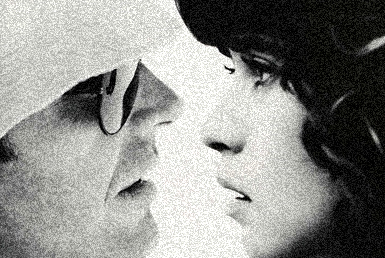

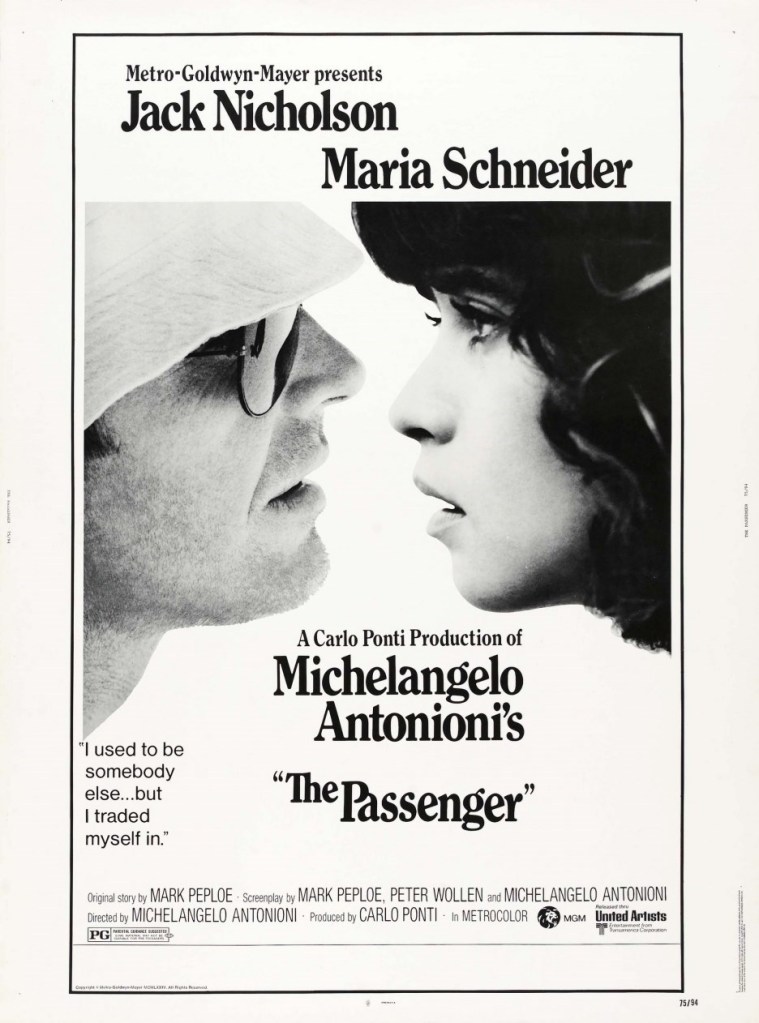
“The Passenger” is a 1975 film directed by Michelangelo Antonioni and starring Jack Nicholson as a disillusioned journalist named David Locke. The film is a slow-burning character study that explores identity, existentialism, and the search for meaning in life.

The film begins with Locke on assignment in Africa, covering a civil war. He becomes disillusioned with the job and the people he is working with and decides to abandon his old life and start anew. He swaps identities with a dead man he meets in a hotel, assuming the name David Robertson and beginning a new life on the run.
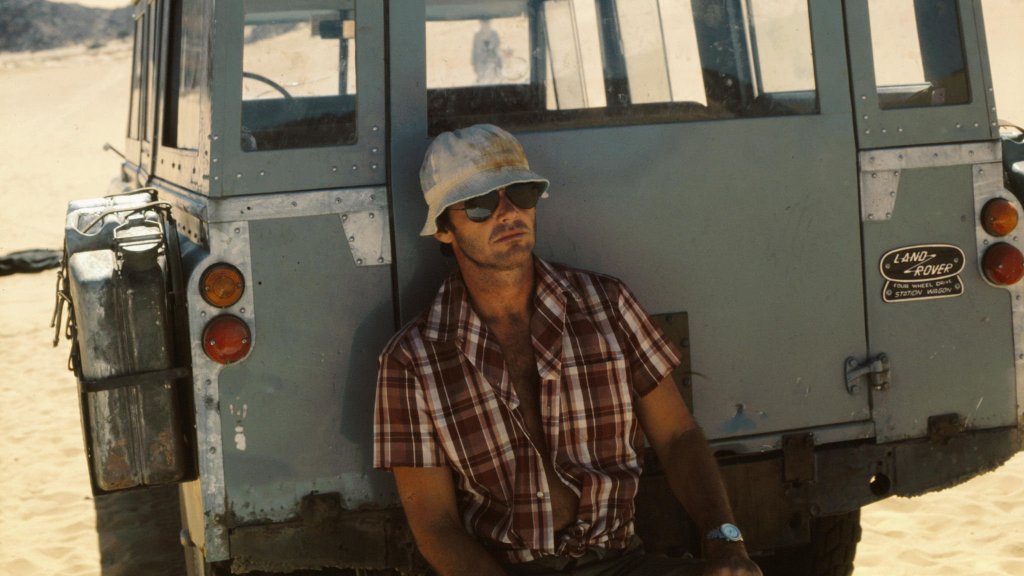

Locke/Roberston travels to Europe to meet a young architecture student named Lara (Maria Schneider). They strike up a relationship, and Locke/Roberston opens up about his past and his reasons for wanting to disappear.
As the film progresses, Locke/Roberston’s past begins to catch up with him, and he finds himself embroiled in a dangerous game of cat and mouse. He becomes increasingly desperate to escape but finds he cannot outrun his past.
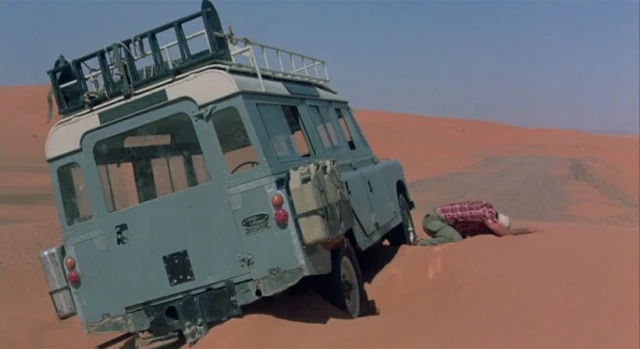
The film’s final shot is one of its most famous and memorable moments. It shows Locke/Roberston lying dead in the desert, having apparently died of thirst. The camera then pans up to reveal a wide shot of the desert landscape before cutting to a close-up of a group of people walking in the distance. The camera then cuts back to Locke/Roberston’s body, as a fly lands on his mouth, and the film ends.
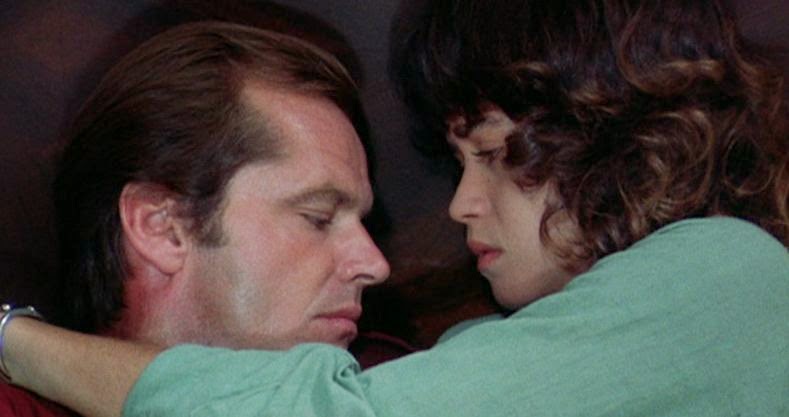
The ending is intended to be ambiguous, leaving the audience to interpret what has happened to Locke/Roberston. Some viewers have interpreted the shot as suggesting that Locke/Roberston has achieved a kind of spiritual enlightenment or transcendence. In contrast, others see it as a more nihilistic and bleak ending. Regardless of how one interprets the ending, it remains one of cinema history’s most iconic and haunting final shots.

 The Other Cinema