

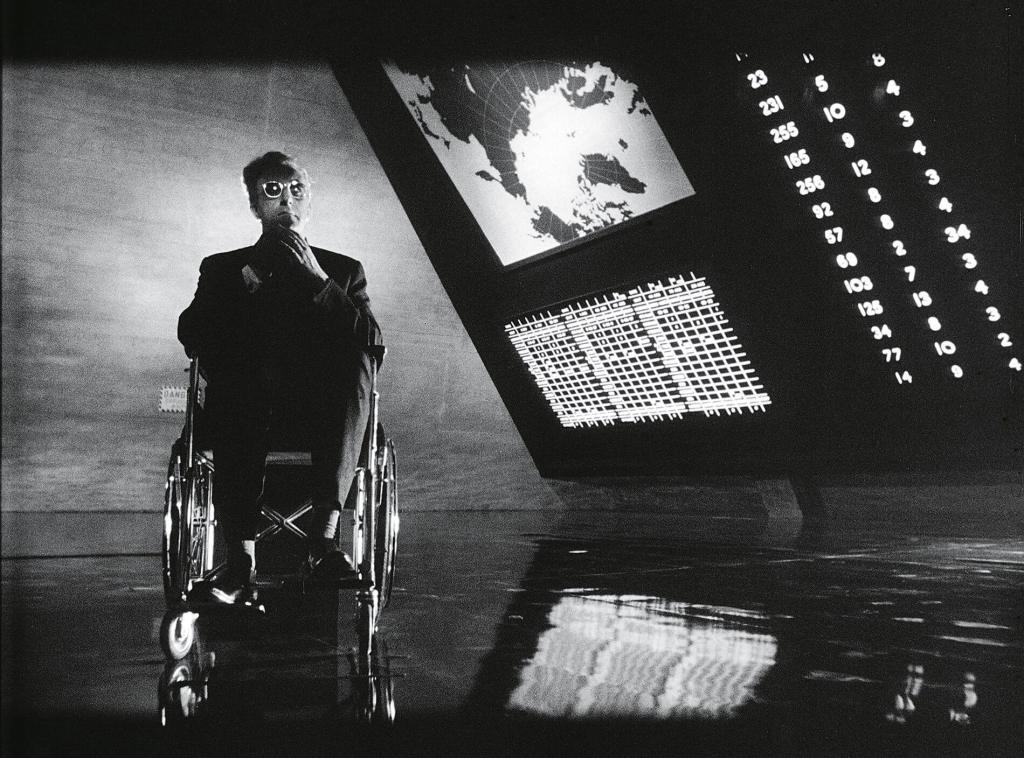
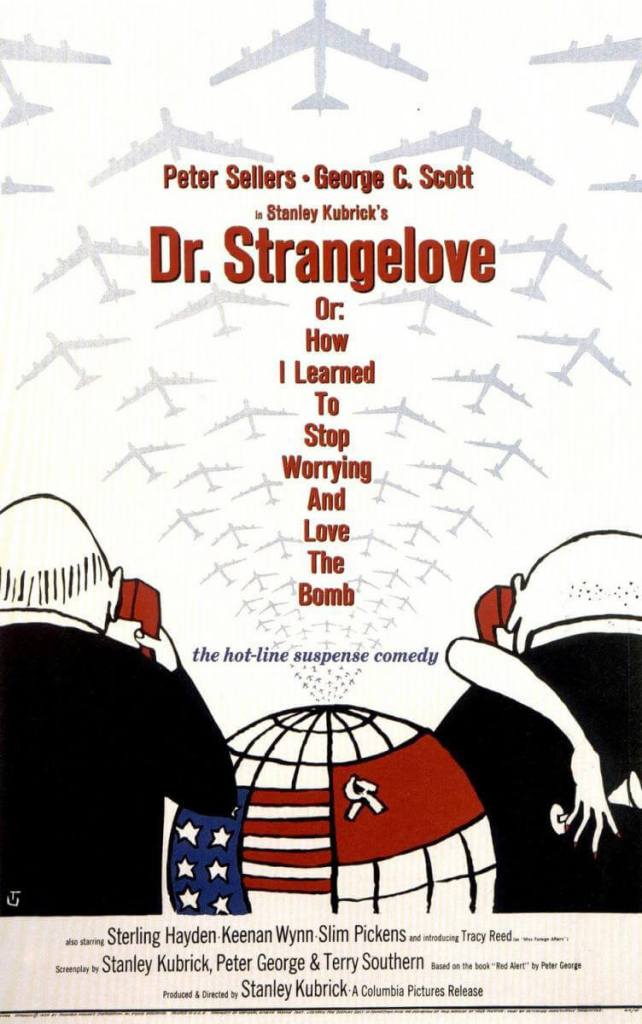
Dr. Strangelove, or: How I Learned to Stop Worrying and Love the Bomb, is a satirical black comedy film directed by Stanley Kubrick and released in 1964. Set during the Cold War, the film critiques nuclear weapons and the absurdity of mutually assured destruction. It explores the dangers of human error, political posturing, and the potentially catastrophic consequences of a nuclear conflict.
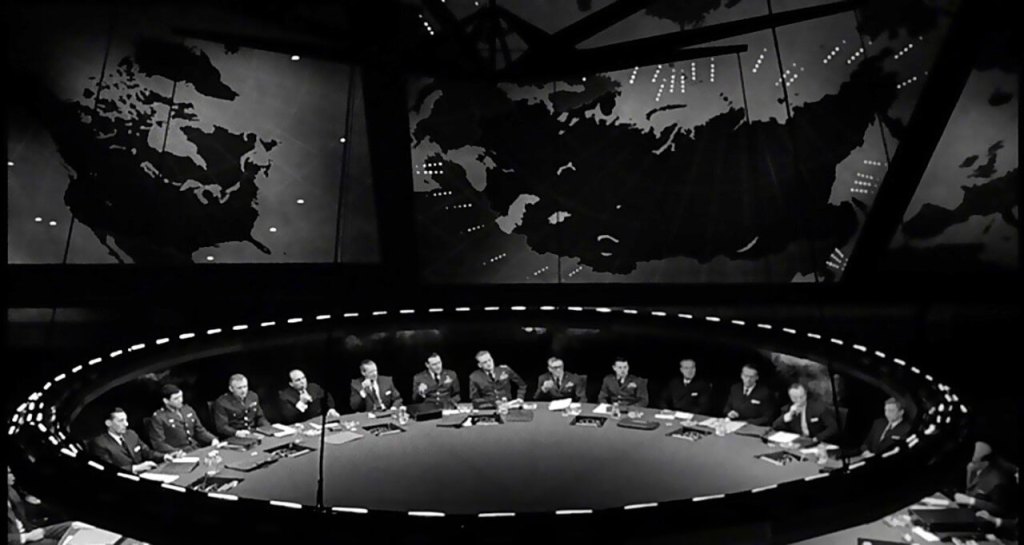

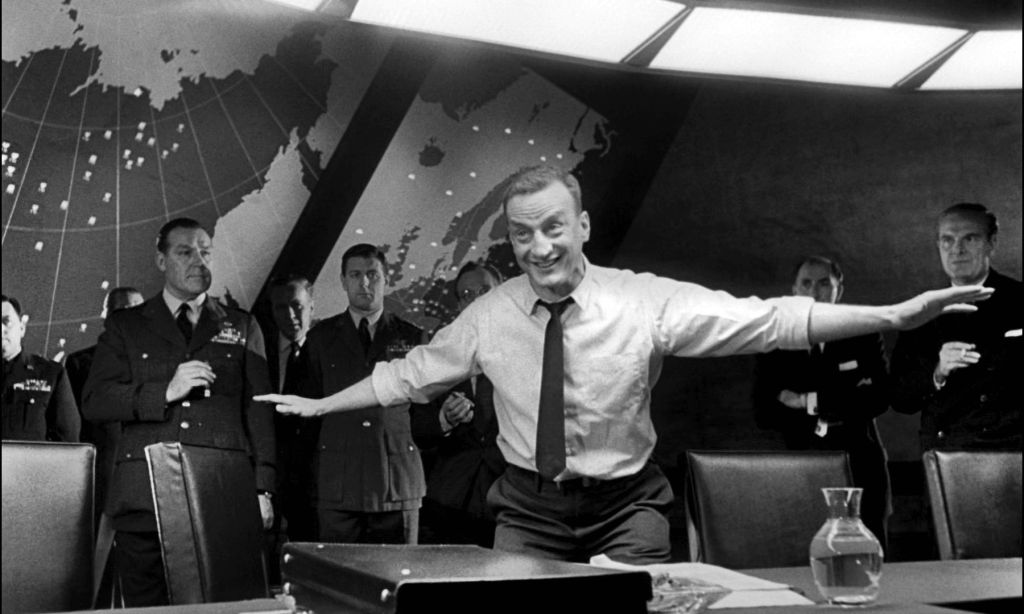

The story begins with General Jack D. Ripper (Sterling Hayden), a deranged United States Air Force general, who orders a fleet of B-52 bombers to launch a nuclear attack on the Soviet Union without the President’s knowledge or authorization. As news of Ripper’s rogue action reaches the Pentagon’s War Room, President Merkin Muffley (Peter Sellers) and his advisors scramble to avert an all-out nuclear war.




The film follows several parallel storylines that converge in the War Room. One of the central characters is Group Captain Lionel Mandrake (Peter Sellers), a British officer stationed on Ripper’s base, who becomes suspicious of Ripper’s erratic behavior and tries to intervene.




Another significant character is Dr. Strangelove (also portrayed by Peter Sellers), a former Nazi scientist who uses a wheelchair and is now a presidential advisor. Strangelove, while brilliant, is afflicted with eccentricity and delivers darkly humorous insights into the madness of the situation.
As tensions rise and the clock ticks towards annihilation, the President communicates with the Soviet Premier Dmitry Kissov (Peter Bull), desperately attempting to convince him that the American attack is unauthorized and prevent a Soviet counterstrike.



With political satire and absurdity, Kubrick skillfully exposes the flaws of the nuclear war apparatus and highlights the danger posed by human fallibility. The film uses dark humor and irony to satirize the military-industrial complex and political leaders who place power and ideology above reason and humanity.

In Dr. Strangelove, Stanley Kubrick masterfully captures the sense of impending doom while simultaneously providing an uncomfortable yet necessary examination of the absurdities of war.
Available on streaming platforms and via The Criterion Collection
 The Other Cinema