
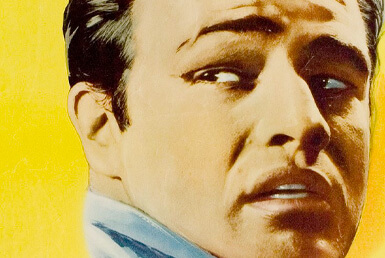
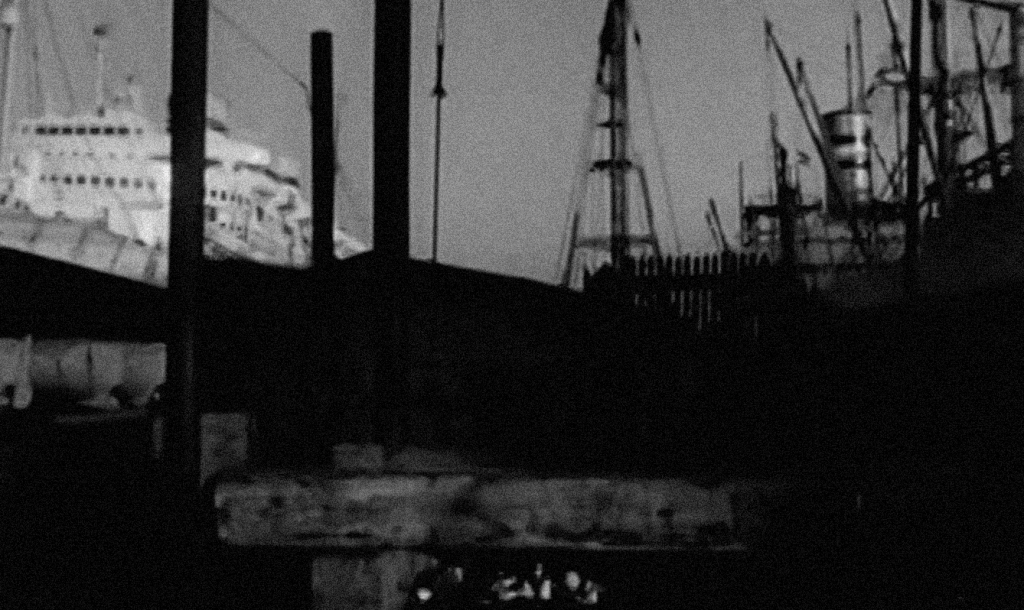
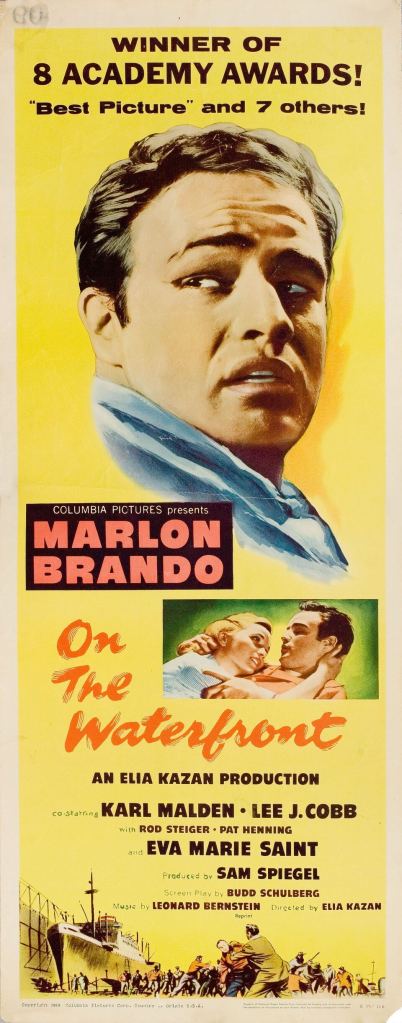
“On the Waterfront” (1954) is a crime drama directed by Elia Kazan and starring Marlon Brando, Eva Marie Saint, Rod Steiger, Karl Malden, and Lee J. Cobb. Set in the grimy, corruption-ridden world of the New Jersey docks, the film tells the story of one man’s struggle to stand up against a corrupt and violent labor union. It explores themes such as corruption, personal redemption, and social justice.

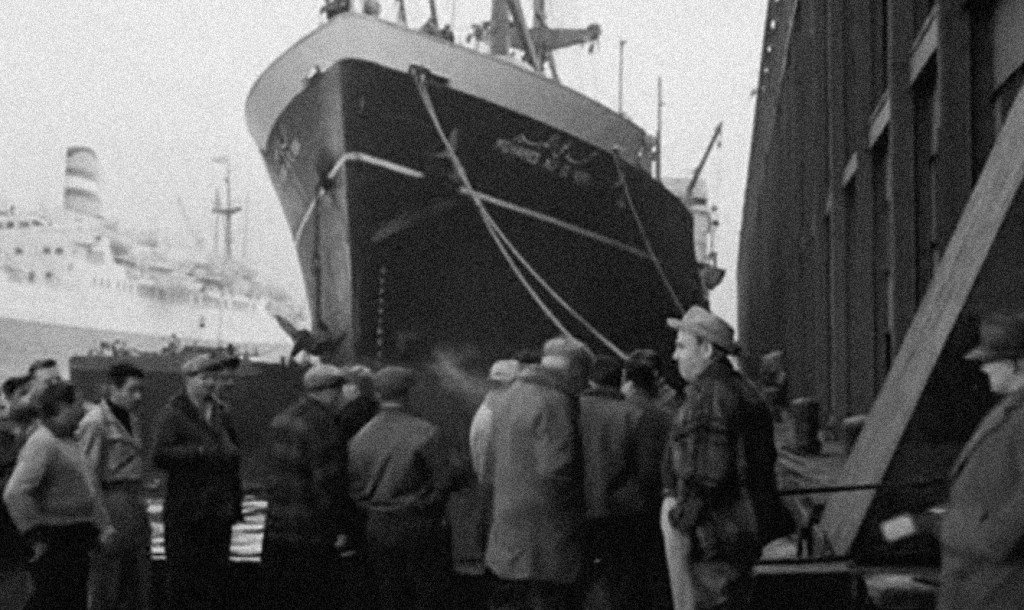
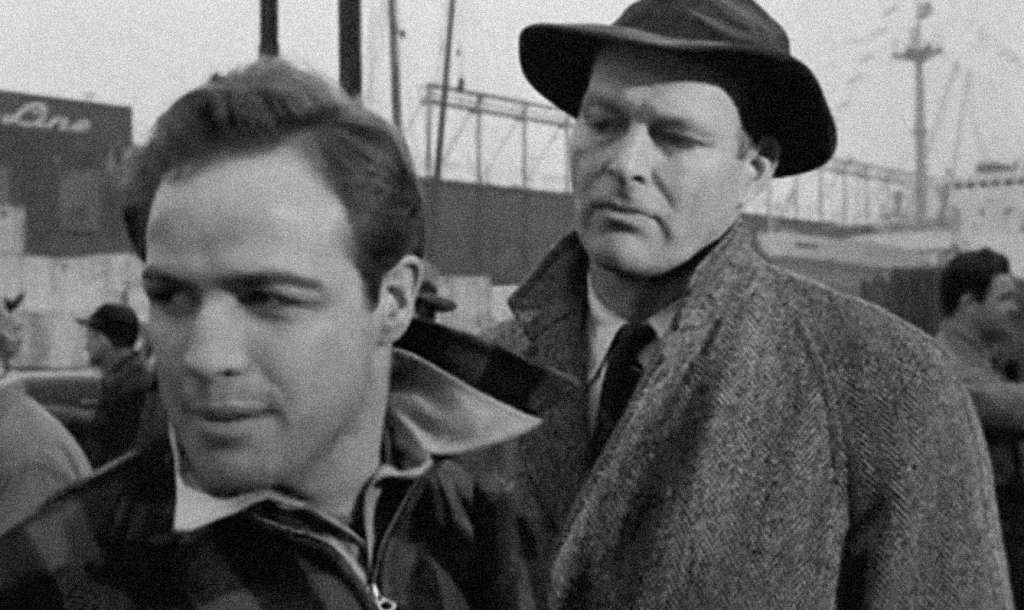
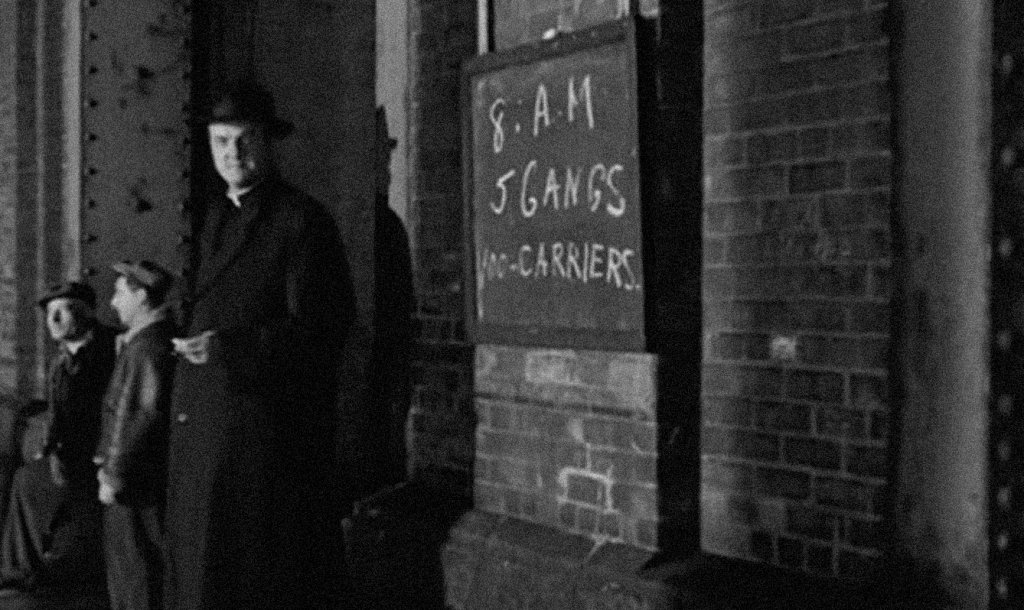

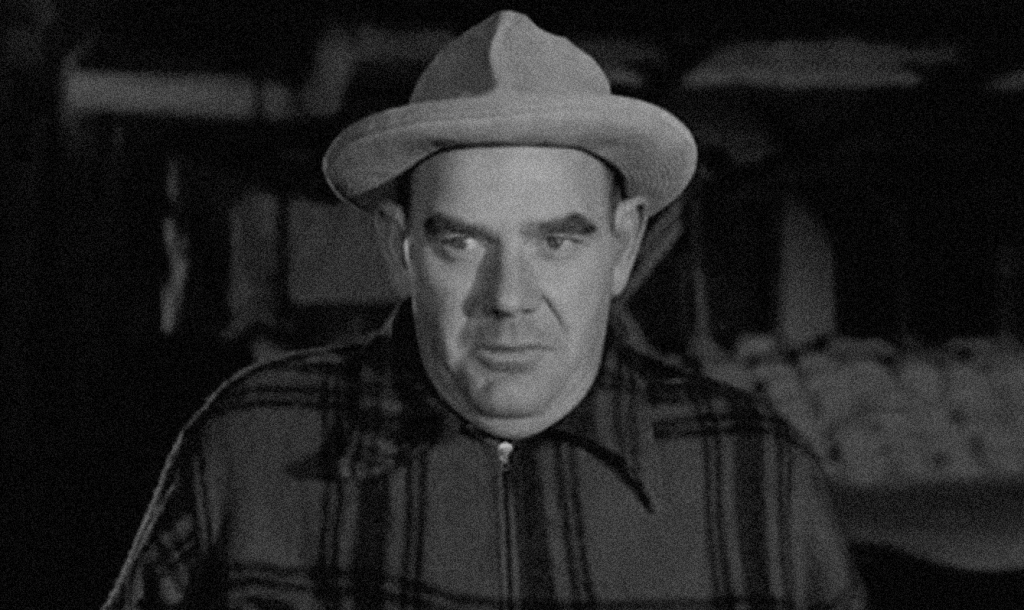
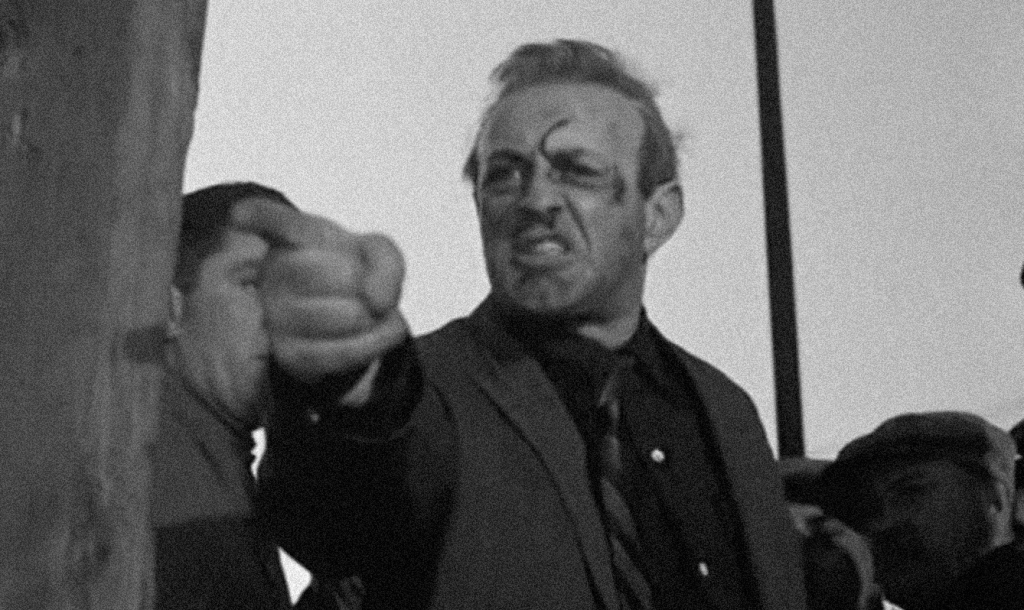
The film begins on the docks of Hoboken, New Jersey, where dockworkers work under the control of a corrupt labor union led by Johnny Friendly (played by Lee J. Cobb), a ruthless mob boss who uses fear and violence to control the workers. The union keeps the longshoremen in line through intimidation, assigning jobs based on favoritism and brutality. Anyone who dares to speak out against the union faces severe consequences, and dockworkers constantly fear retaliation.
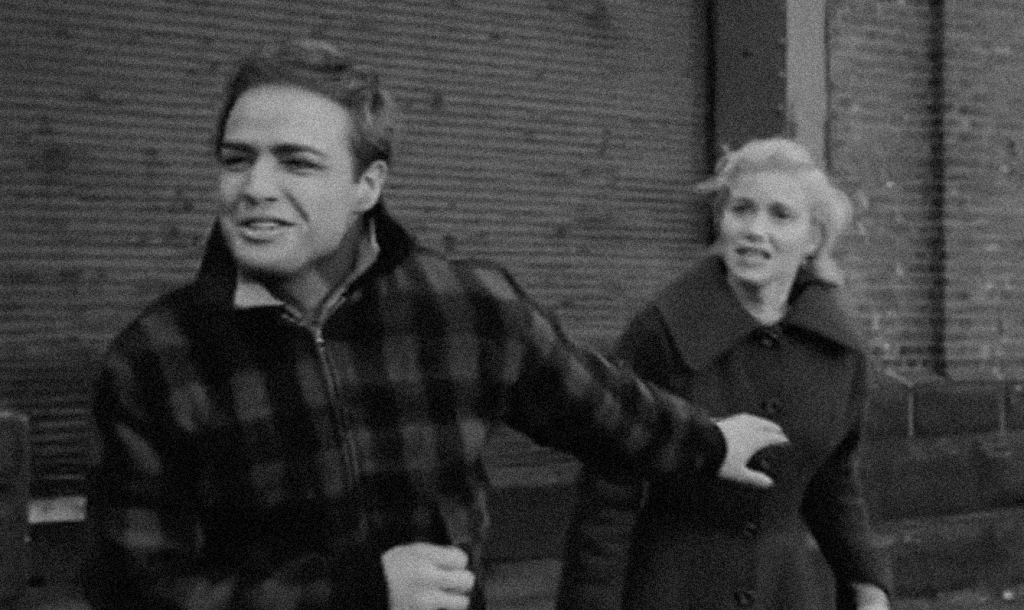
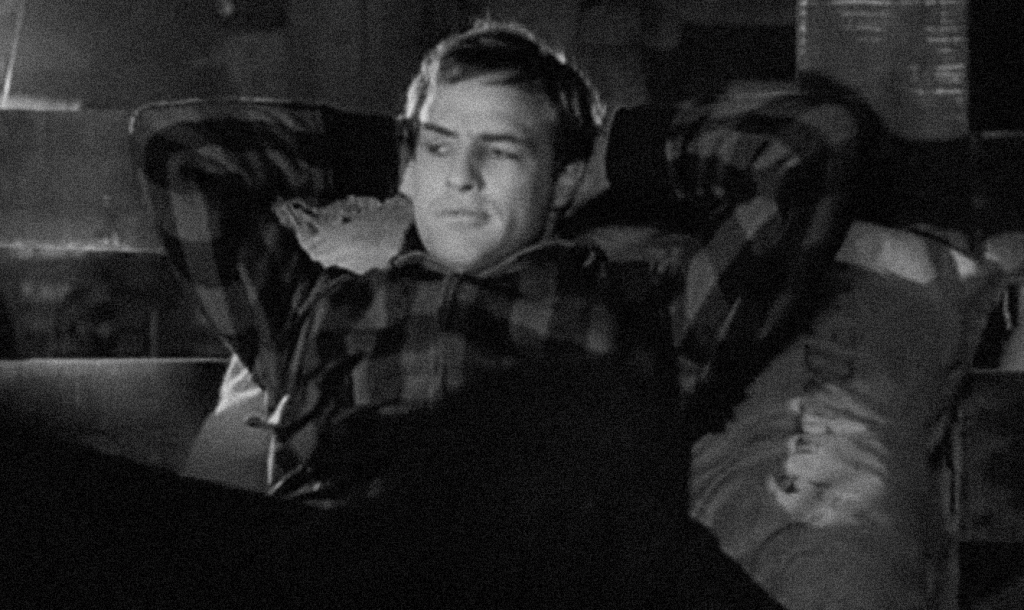
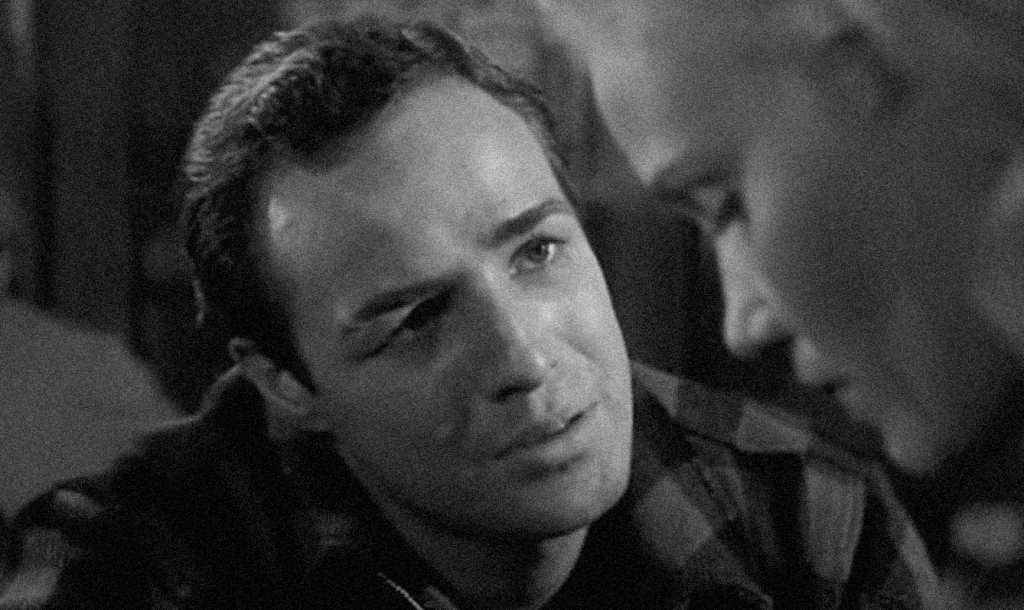
At the center of this world is Terry Malloy (played by Marlon Brando), a former prizefighter whose boxing career was manipulated and ruined by Johnny Friendly. Terry now works as a dockworker, acting as an errand boy for the mob and doing small jobs for Friendly’s gang. Although challenging and street-smart, Terry is conflicted and passive, blindly loyal to the corrupt system that exploits him and his fellow workers.


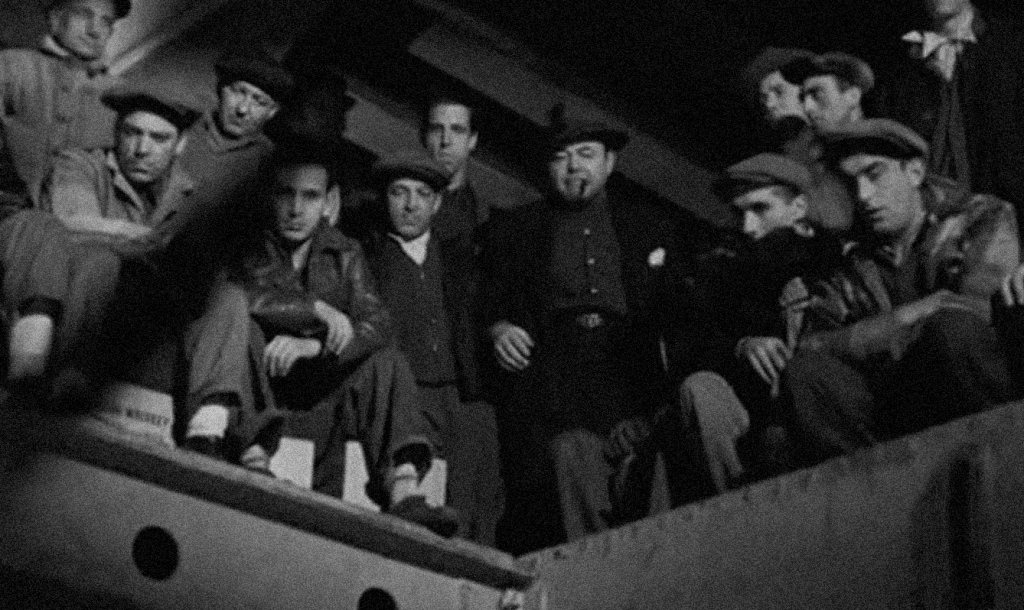
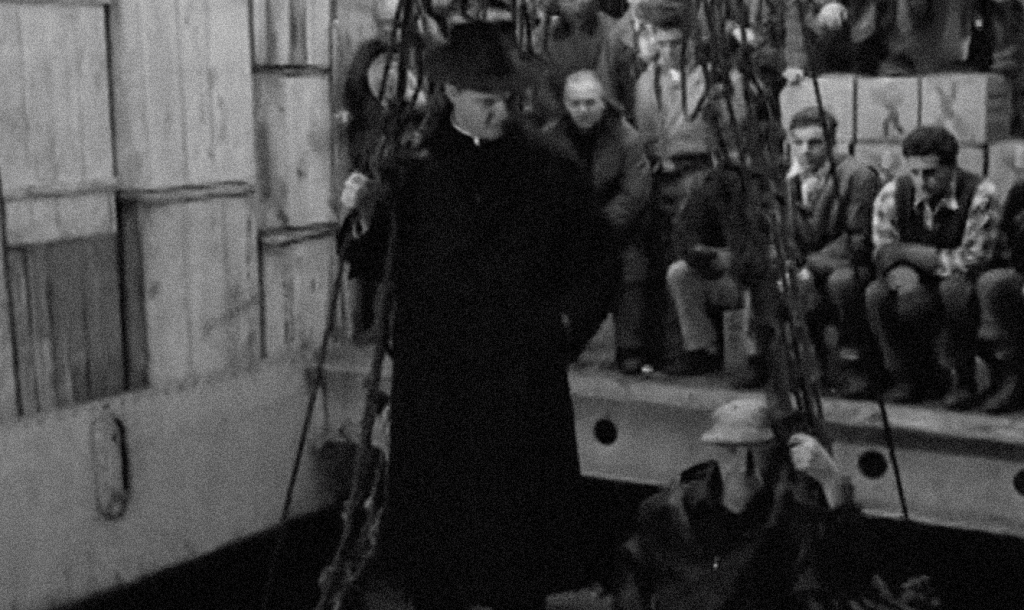
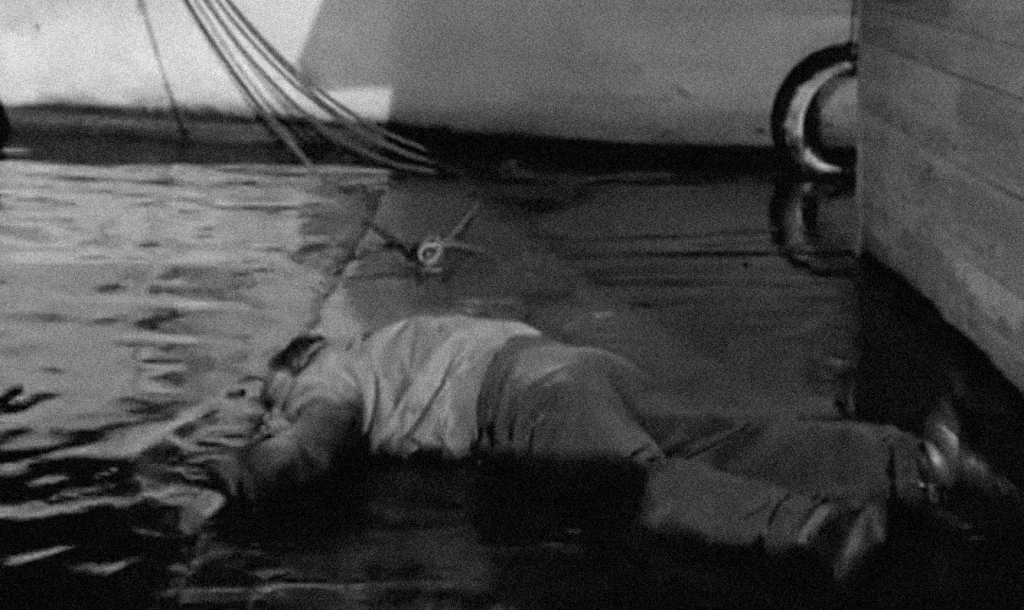
The film opens with a pivotal event: Terry is unwittingly used in a setup that results in the murder of a fellow dockworker, Joey Doyle (played by Ben Wagner). Joey had planned to testify about the corruption within the union, and Johnny Friendly wanted him silenced. Terry, not realizing that Joey would be killed, is devastated when he learns that he had been used to lure Joey to his death. This event serves as the catalyst for Terry’s internal moral struggle throughout the film.


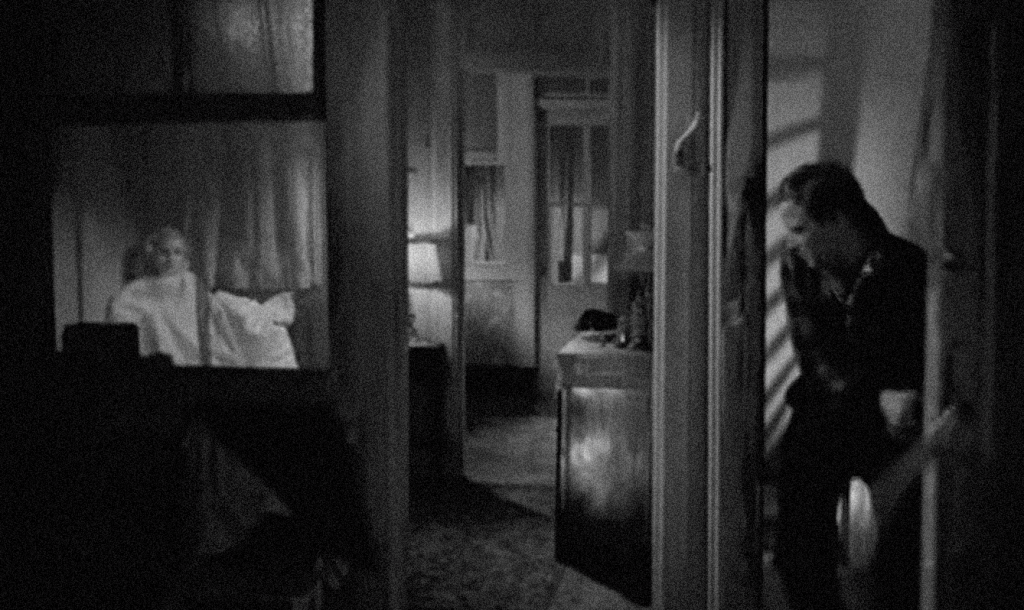
Following Joey’s death, his sister Edie Doyle (played by Eva Marie Saint) returns home from college, determined to find out who was responsible for her brother’s murder. Edie is a beacon of innocence and moral clarity, unafraid to ask questions in a world where everyone else is too afraid to speak out. Her presence begins to stir something within Terry, and despite his guilt and reservations, he finds himself drawn to her.


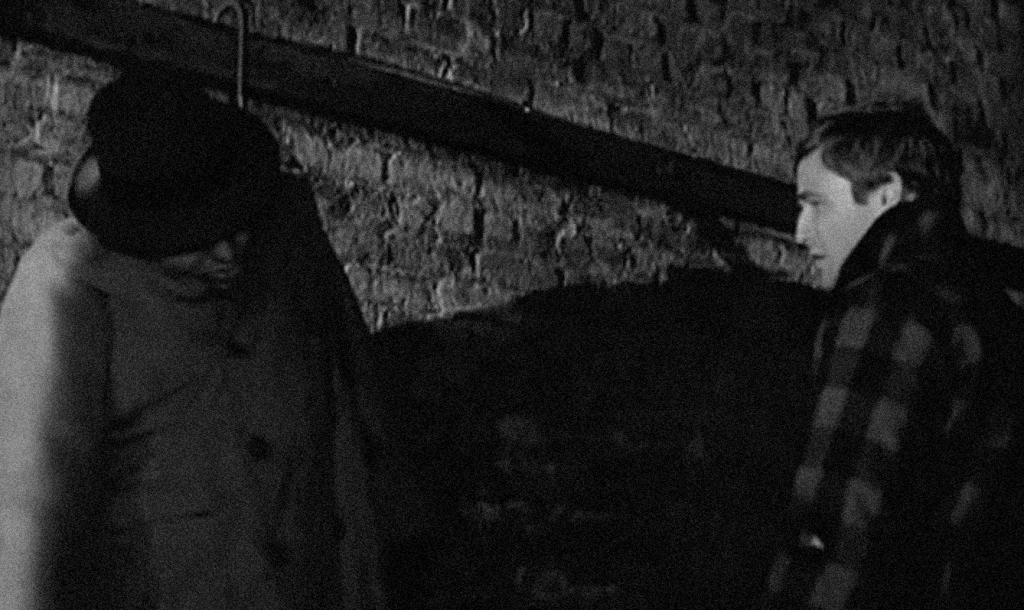
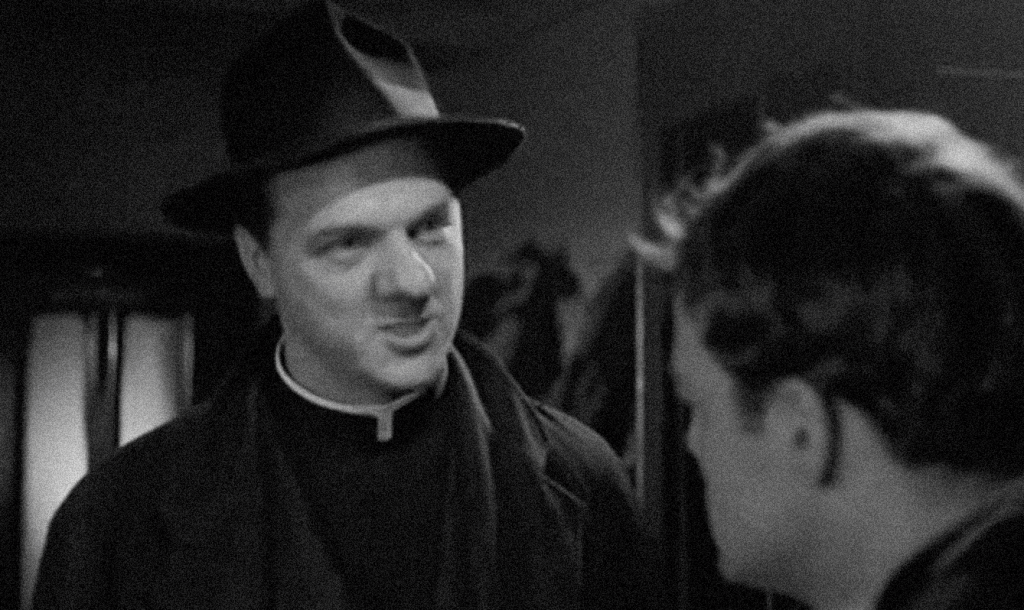

At the same time, Father Barry (played by Karl Malden), a local priest with a strong sense of justice, encourages the dockworkers to stand up against the corrupt union. Father Barry becomes Terry’s mentor, pushing him to confront his conscience and do the right thing.

As Terry and Edie grow closer, she tells him what happened to Joey. Terry, burdened by guilt, eventually confesses to Edie that he played a role in her brother’s death, which devastates her. She struggles with her feelings for Terry, torn between her desire for justice and growing affection for him.


Terry’s moral crisis deepens when his brother, Charley “The Gent” Malloy (played by Rod Steiger), who is Johnny Friendly’s right-hand man, pressures Terry to remain loyal to the mob. Charley tries to persuade Terry to keep quiet about Joey’s murder, reminding him of all that Johnny Friendly has done for them. In one of the film’s most famous scenes, Terry and Charley have an emotional confrontation in the back of a taxi. Terry laments how Charley and Johnny Friendly ruined his boxing career by forcing him to throw fights, famously saying, “I coulda been a contender. I coulda been somebody instead of a bum, which is what I am, let’s face it.”
This moment marks a turning point for Terry. Realizing how he has been used and manipulated, Terry takes a stand. He rejects Charley’s plea to remain silent and, with encouragement from Father Barry, agrees to testify in court against Johnny Friendly and the corrupt union leadership. This decision places Terry in grave danger, as the mob will stop at nothing to protect their interests.
Terry’s decision to testify causes a rift with his brother Charley, who is subsequently killed by Friendly’s men as a warning to Terry. Devastated by his brother’s murder but resolved in his newfound sense of purpose, Terry goes through with his testimony, exposing the corruption of the union in court.
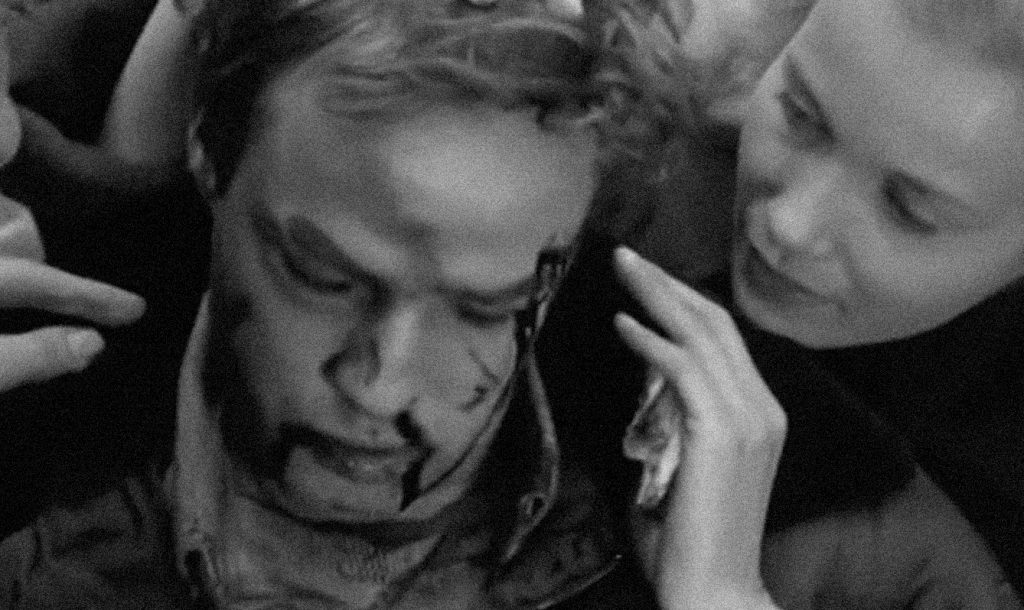

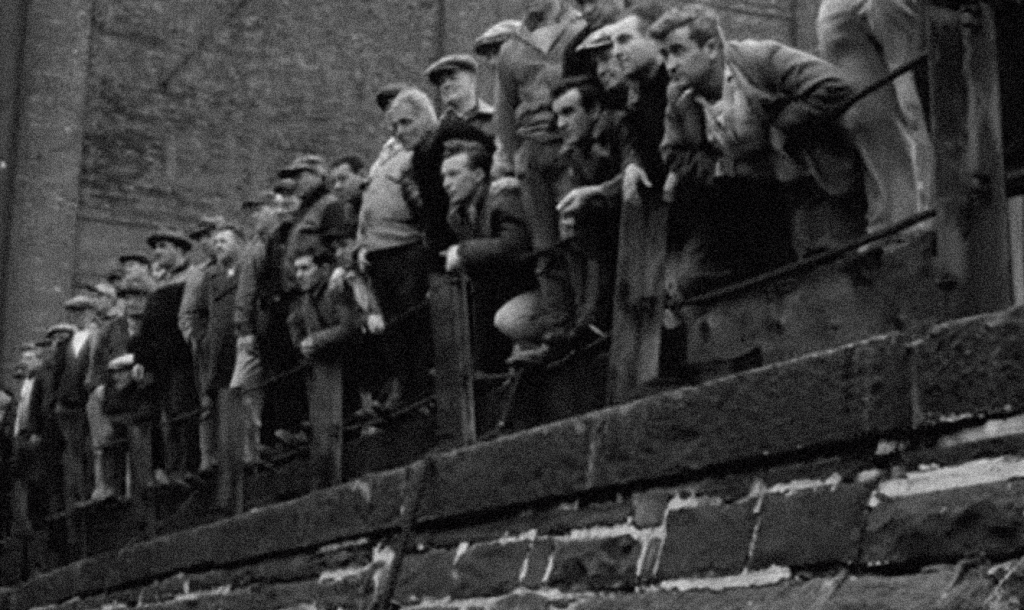
The film’s climax occurs on the docks, where Terry returns to face Johnny Friendly and the rest of the workers. Although he is ostracized and beaten severely by Friendly’s men, Terry refuses to back down. In a powerful final scene, battered but unbroken, Terry stands up and walks down the pier, leading the dockworkers back to work and symbolically breaking Johnny Friendly’s hold over them. The dockworkers, inspired by Terry’s courage, follow his lead, finally breaking free from the mob’s control.


“On the Waterfront” is a deeply thematic film exploring corruption, conscience, personal responsibility, and redemption issues. The story is about one man’s journey from passivity and guilt to moral awakening and action. Terry Malloy’s transformation is central to the film’s message about standing up for justice despite overwhelming odds and personal risk.
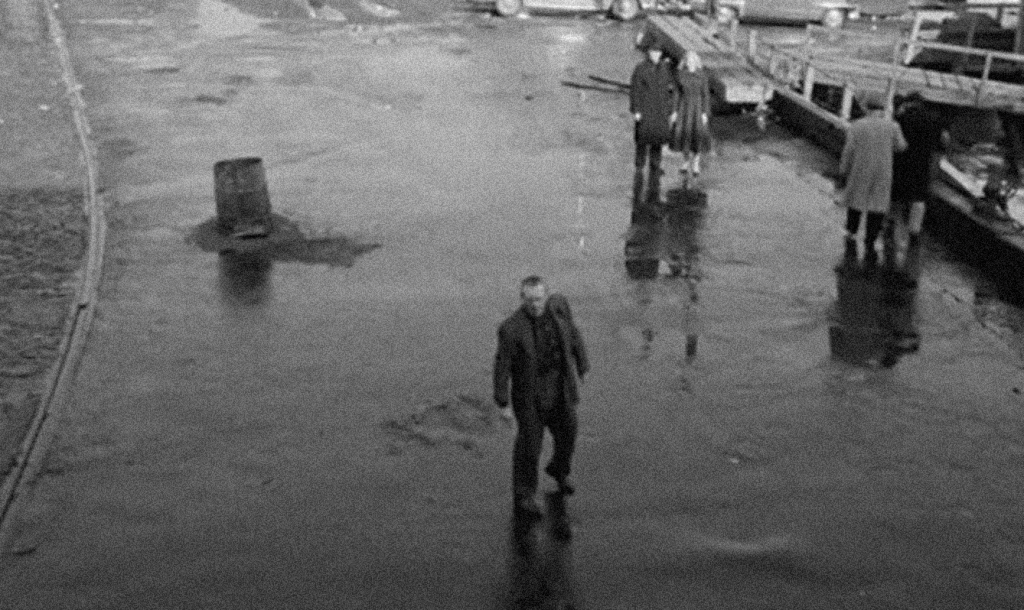

Elia Kazan directed the film, using it as a personal statement about his controversial decision to testify before the House Un-American Activities Committee (HUAC). Kazan’s direction is taut and atmospheric, capturing the docks’ gritty realism and the characters’ intense emotions. His work on “On the Waterfront” earned him an Academy Award for Best Director.
 The Other Cinema