
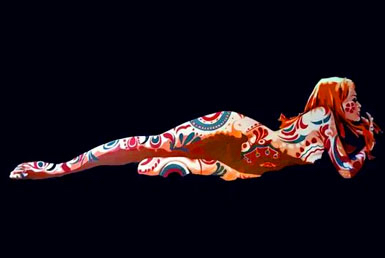



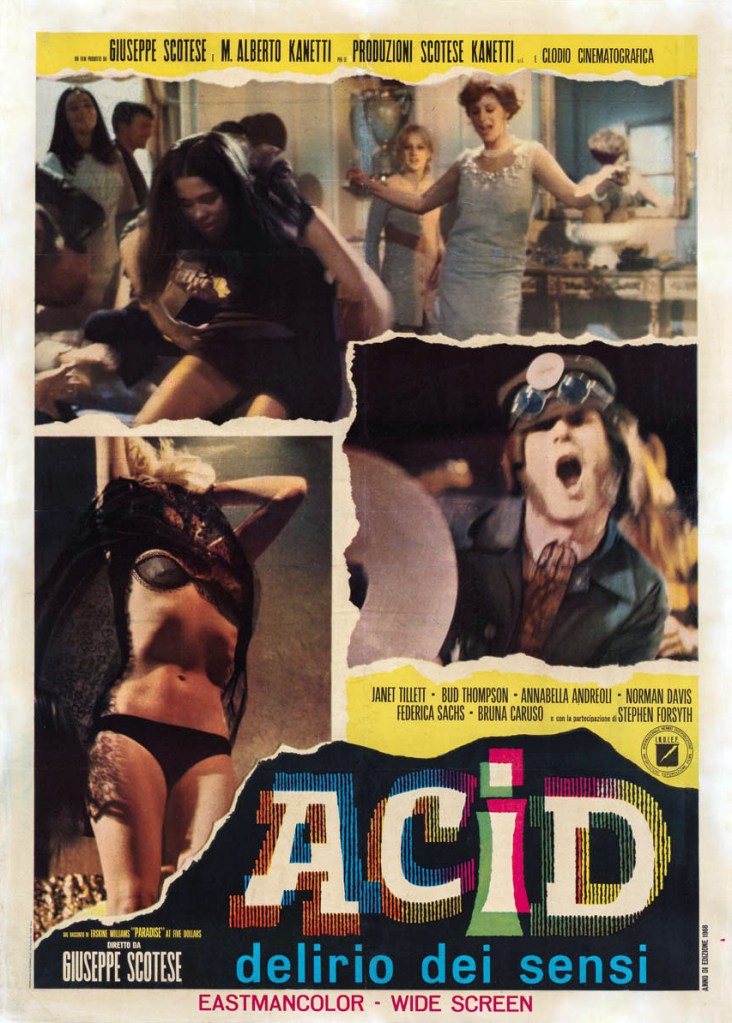
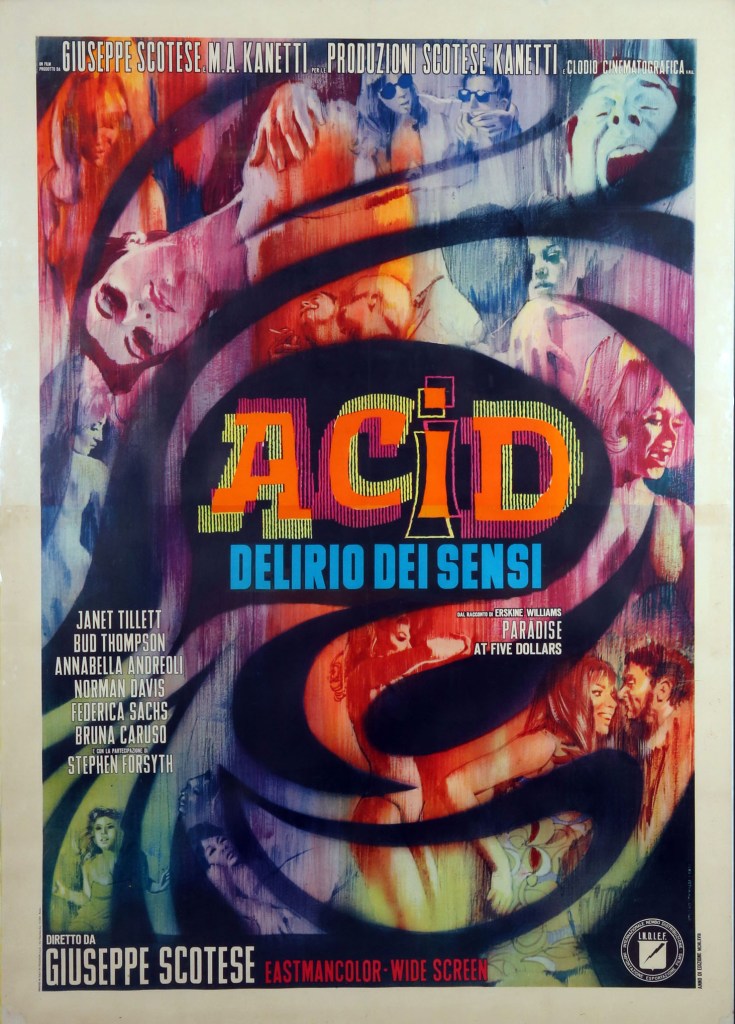
“Acid: Delirio dei Sensi” aka “Acid: Delirium of the Senses” is a 1968 Italian film directed by Giuseppe Maria Scotese. Set in New York City, it blends elements of drama and pseudo-documentary to explore the counterculture and drug scene of the late 1960s.


The film is presented in a series of vignettes depicting the experiences of several young people immersed in the psychedelic culture of the 1960s. Through these stories, the film portrays the allure and dangers of drug use, especially LSD, highlighting its impact on the users’ perceptions and lives. The film also touches upon themes of sexual liberation and the pursuit of freedom, characteristic of the era’s countercultural movements.
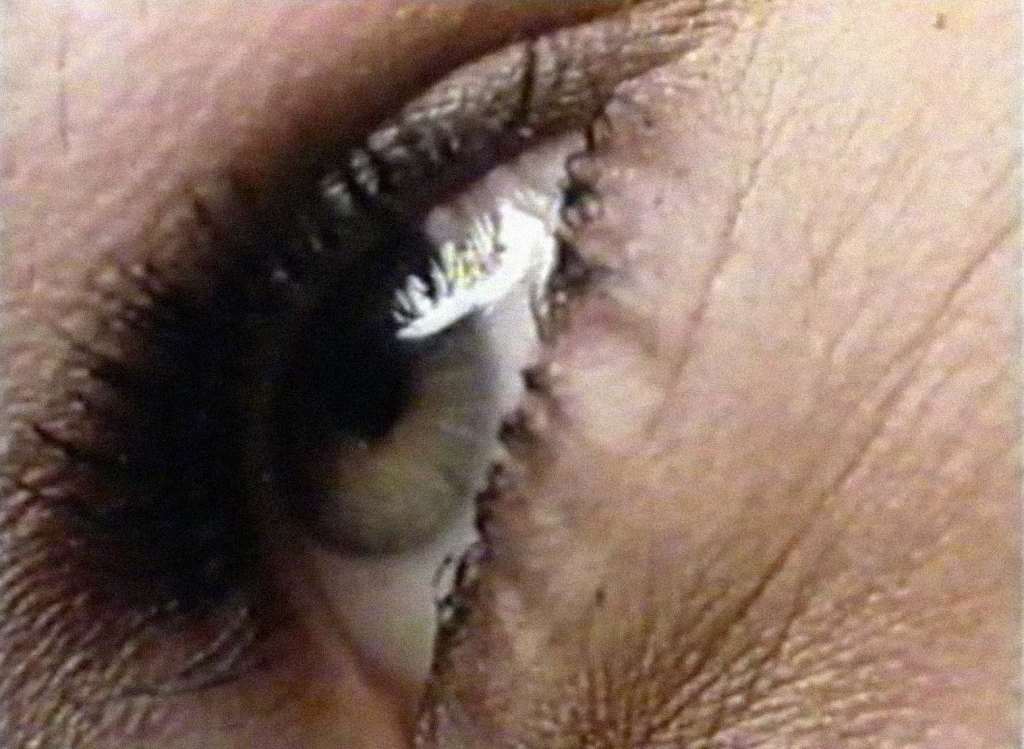
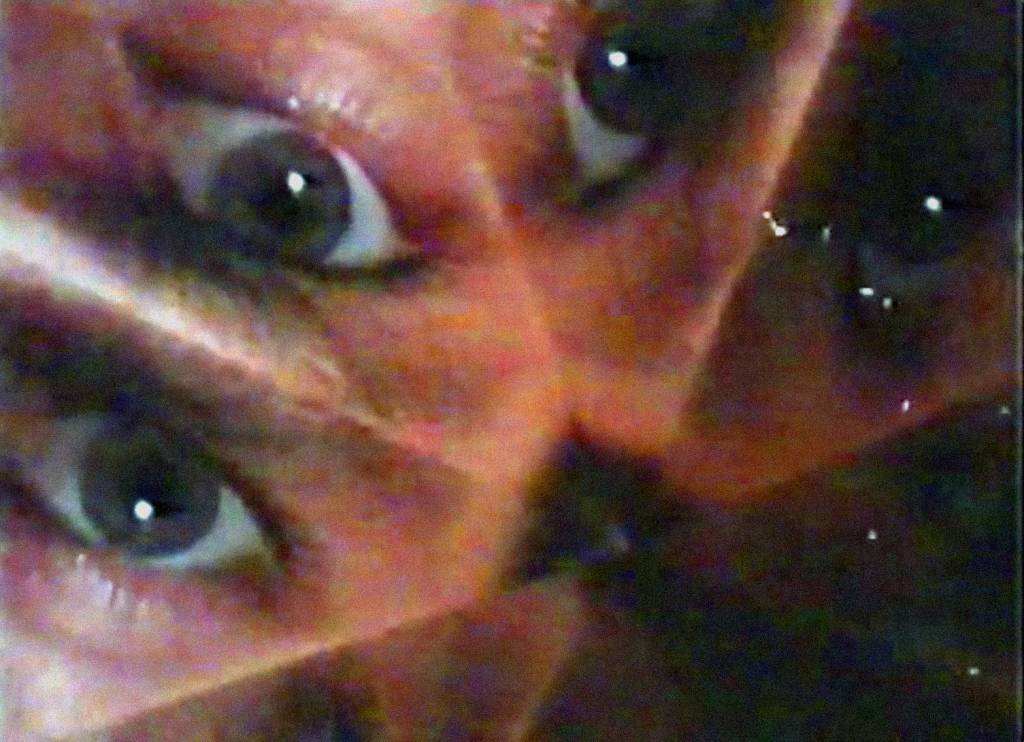

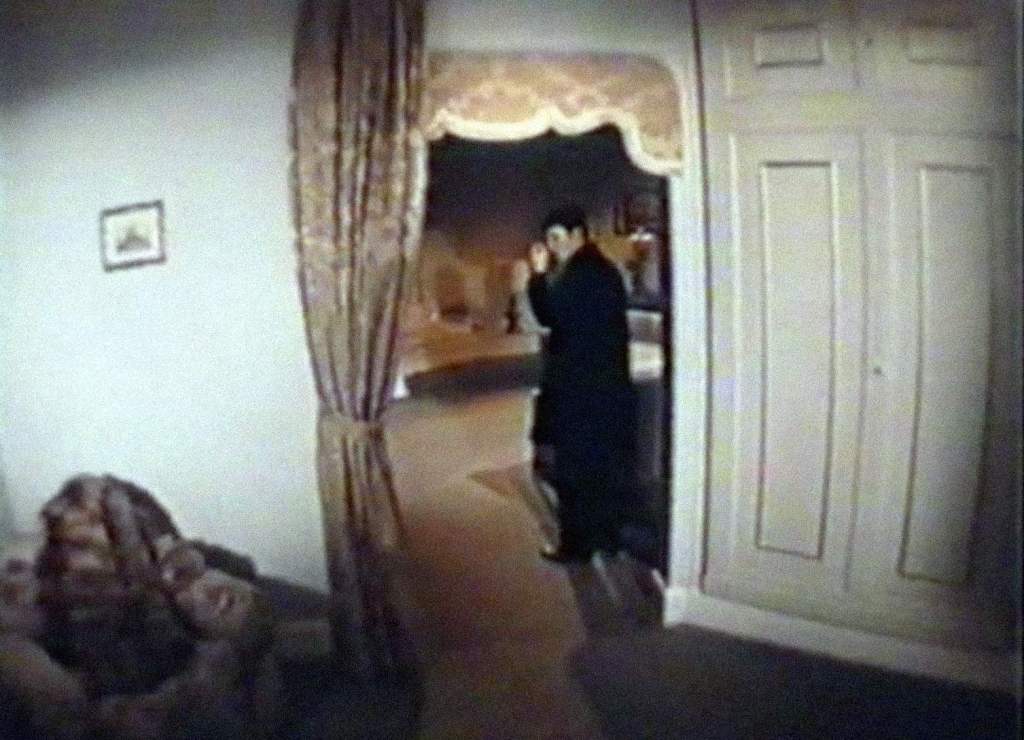

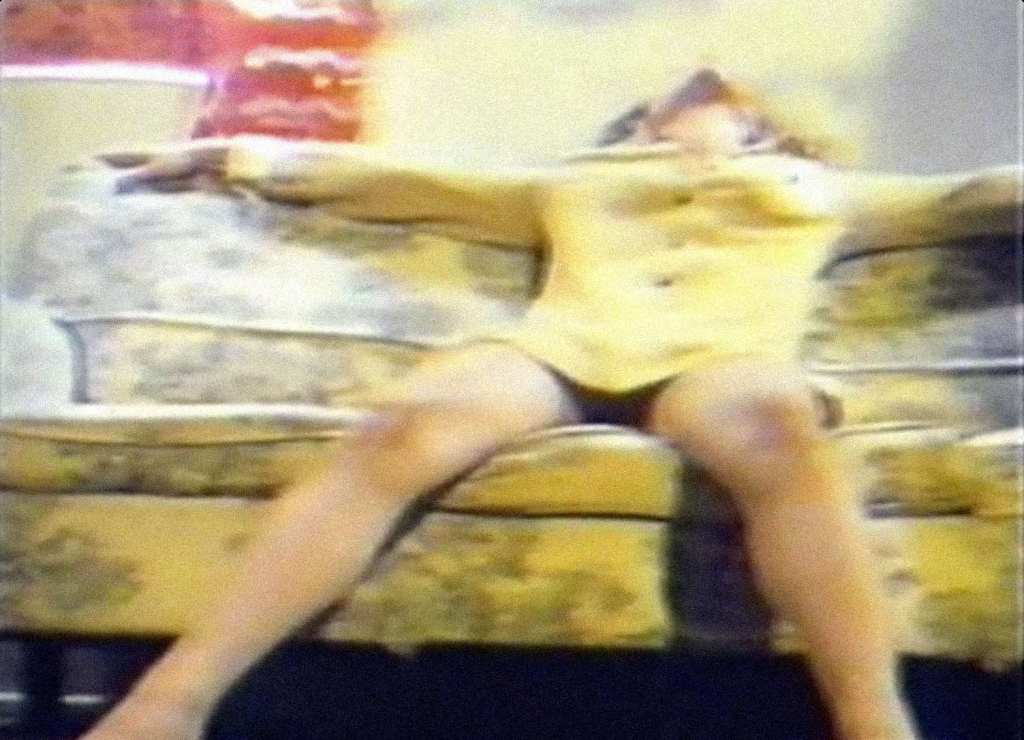
There is no real narrative thread in the film and no central character to lead us through it, so it feels more like an exploration with scenes of heightened drama that interconnect with other scenes, which can make it feel disjointed in places.
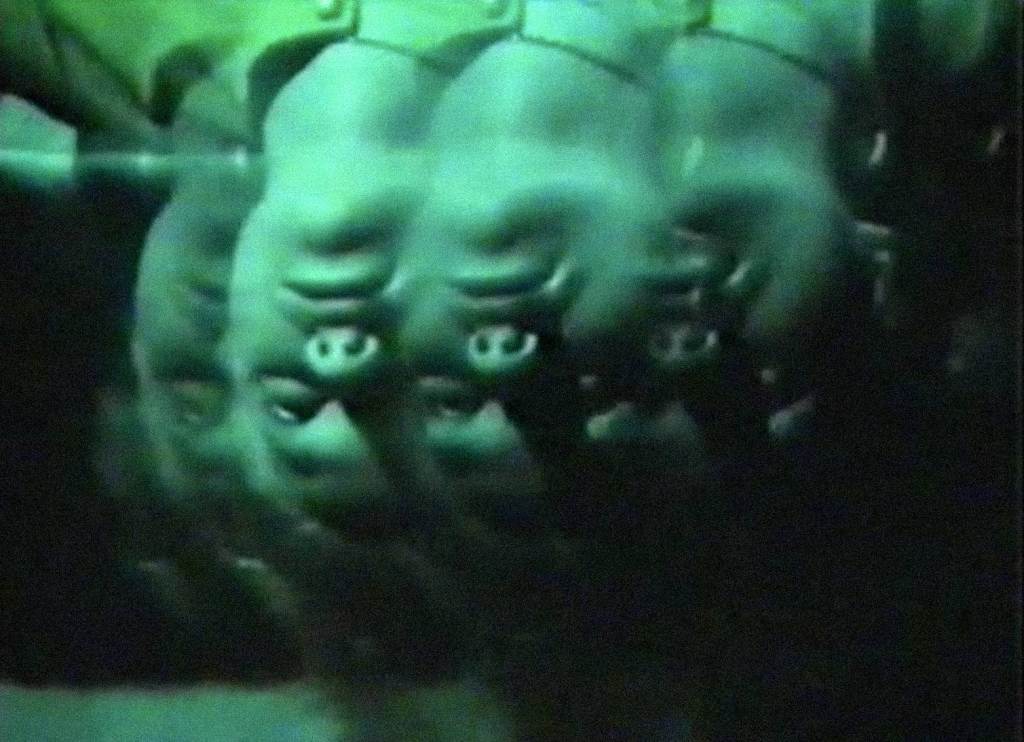
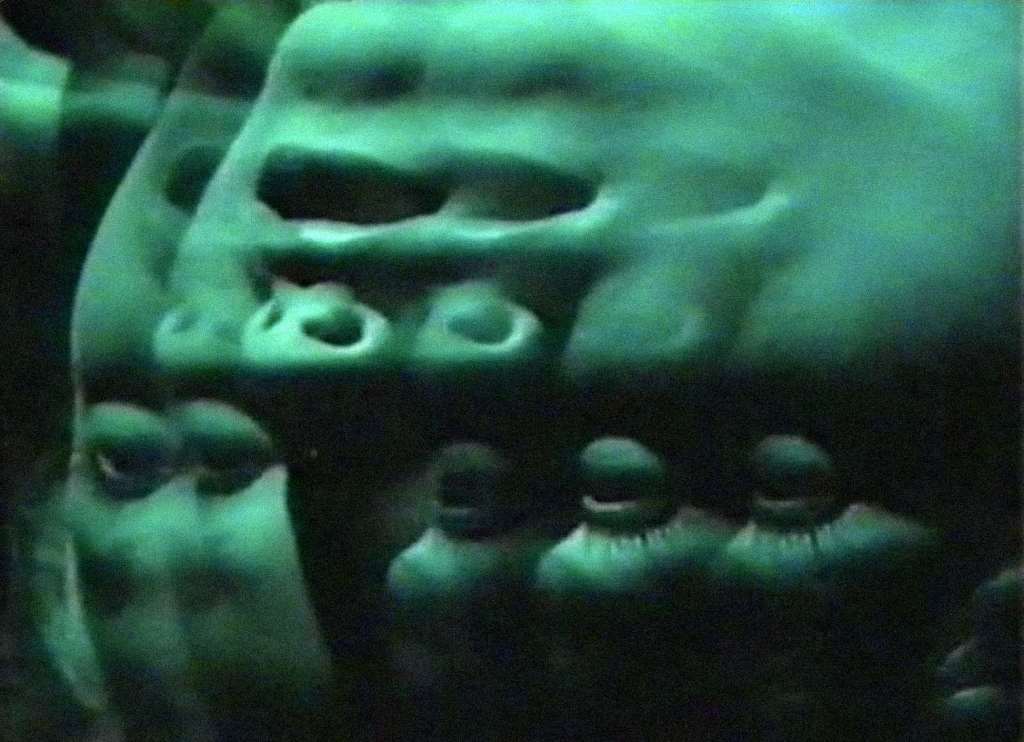
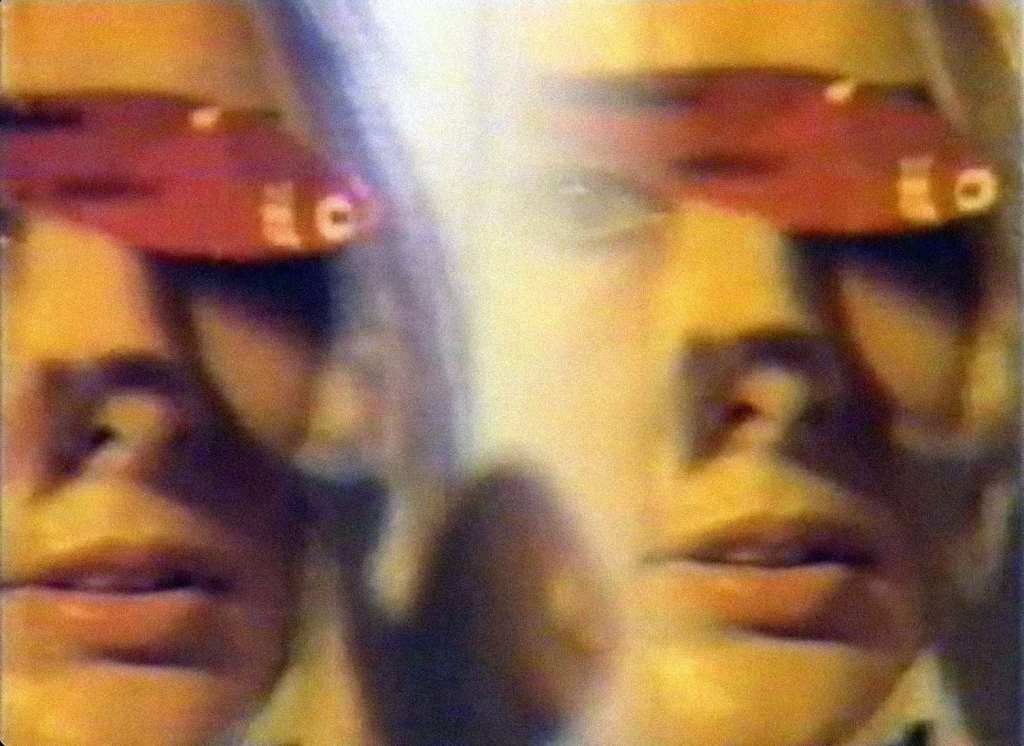




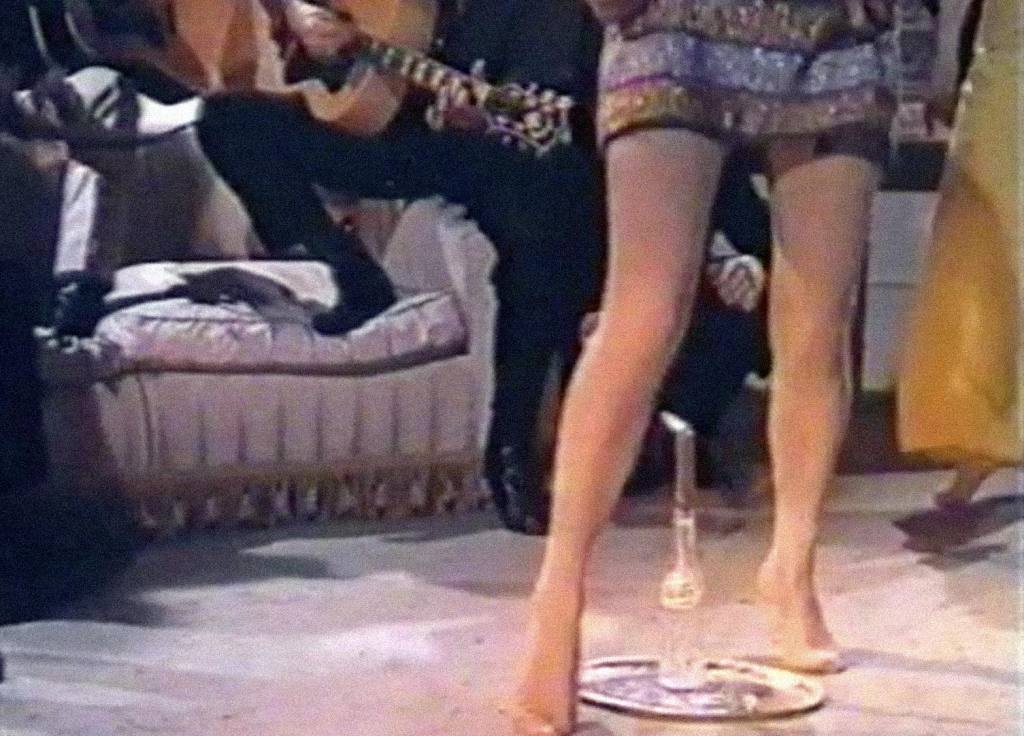
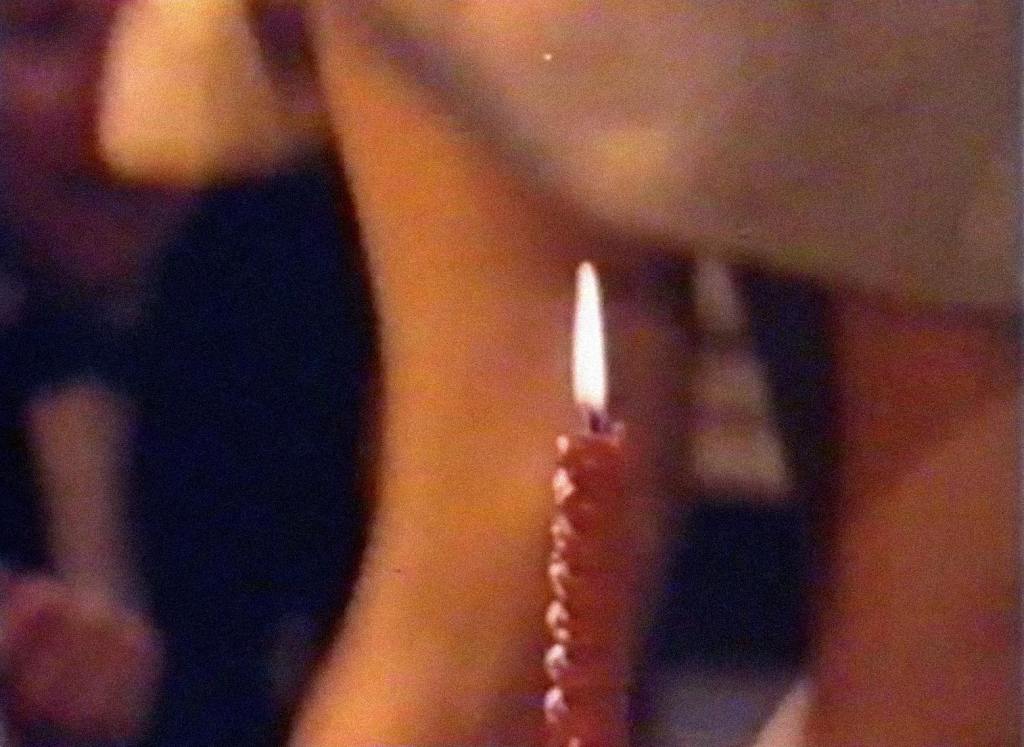
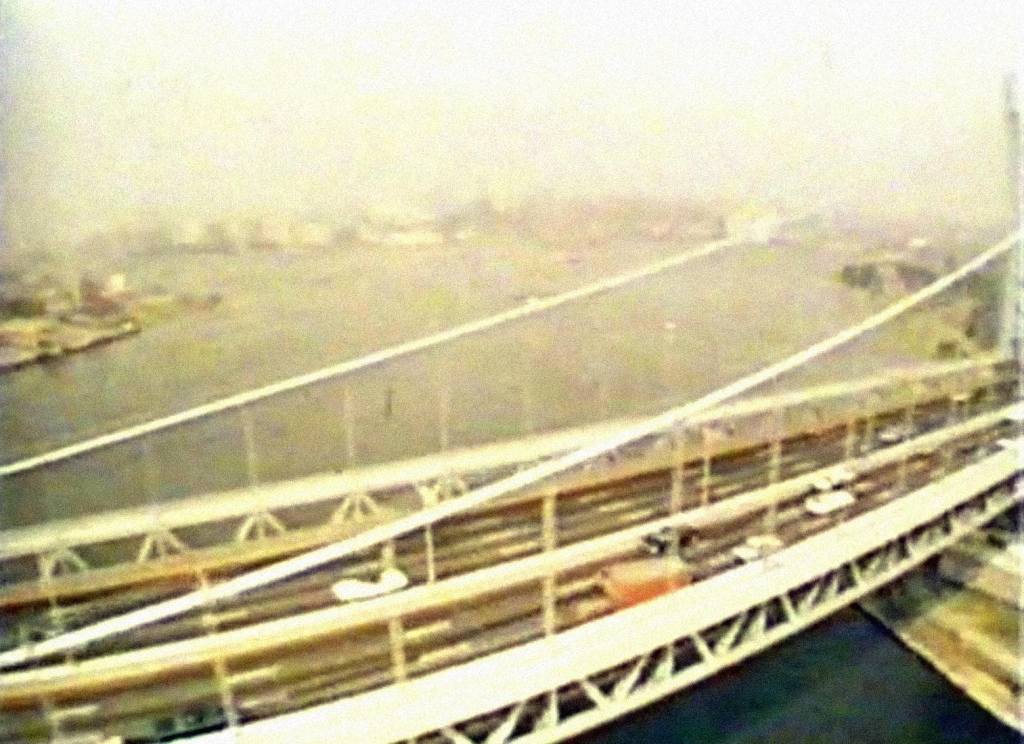
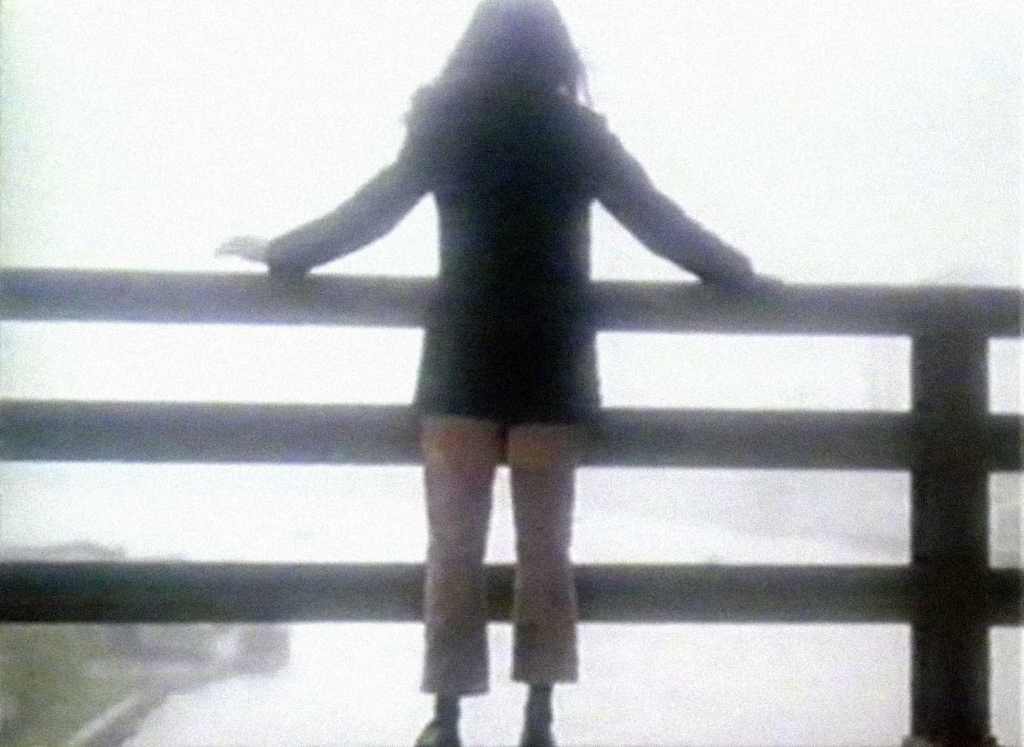
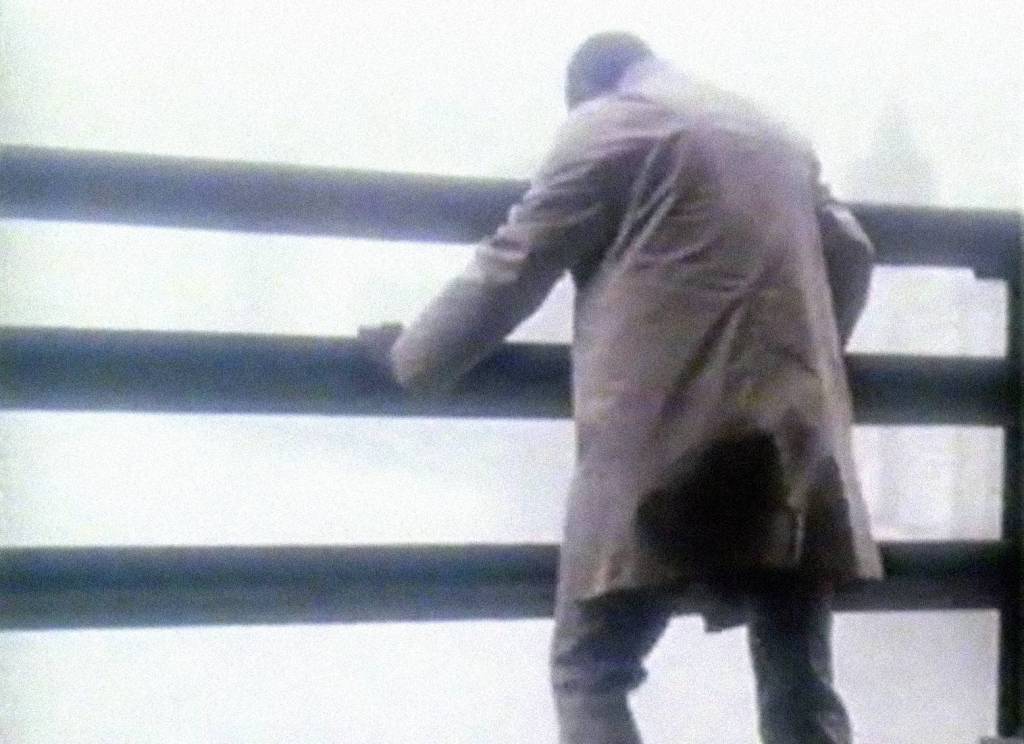
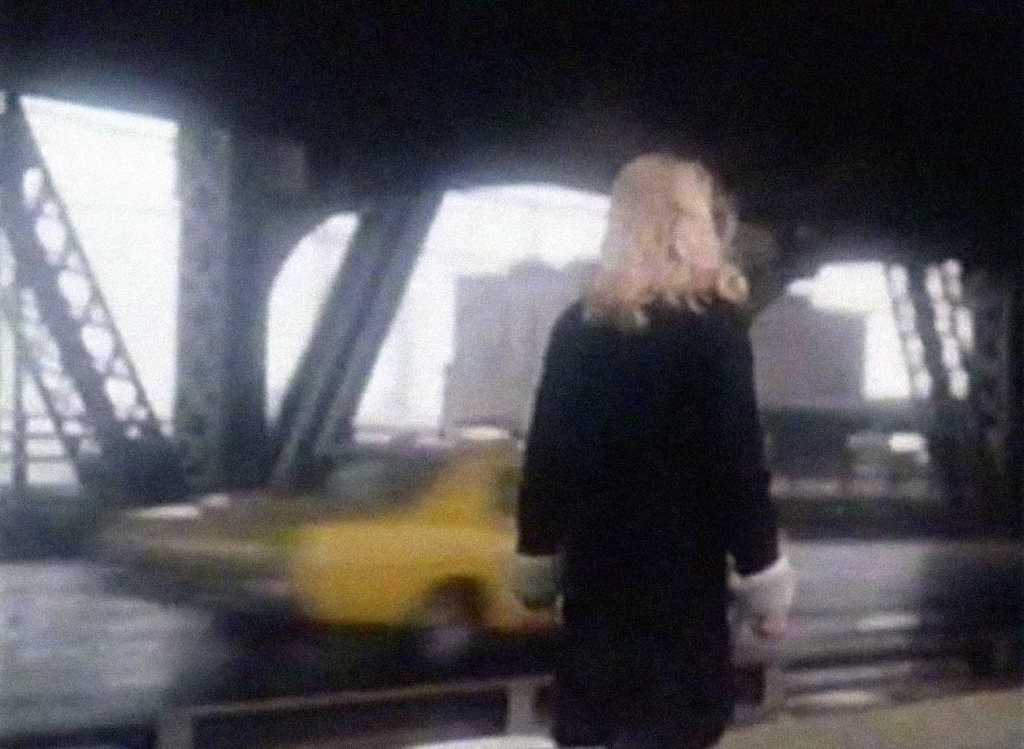
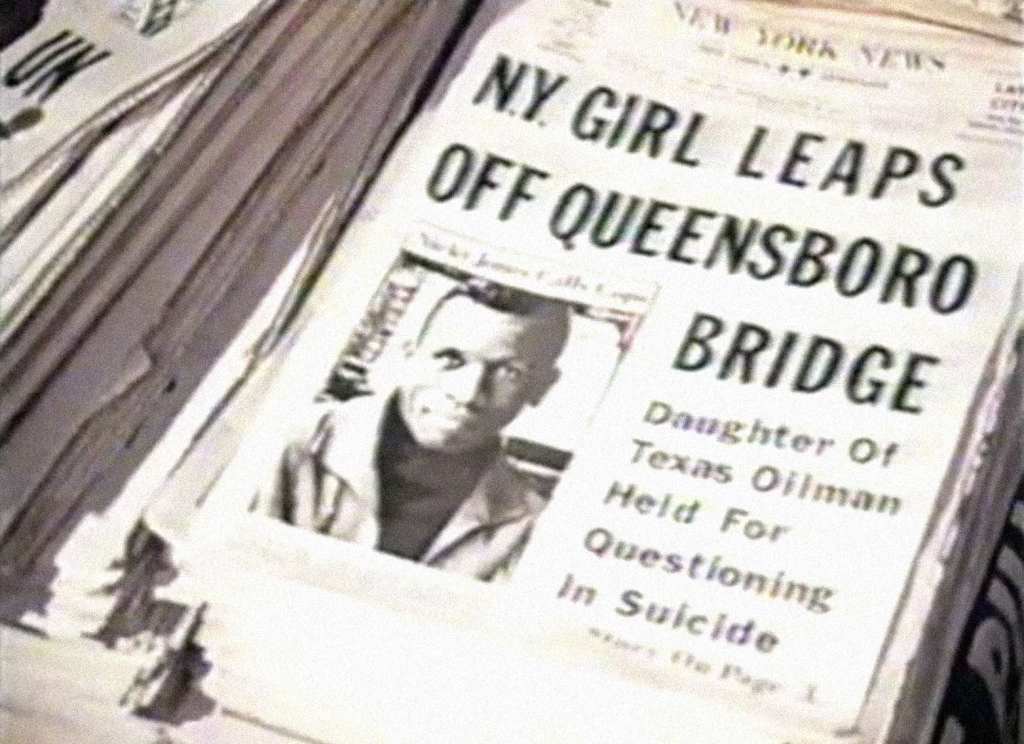
In one particular scene, a couple engages in an erotic game involving a gun, which sets the stage for another character who is visibly under the influence of LSD. This leads to a dramatic moment where the character jumps off the Queensboro Bridge, eliciting shock from one couple member but not the other. This moment serves to illustrate the potential adverse effects of the drug, highlighting the themes of social disconnection and varying perceptions of reality that can accompany drug use. In a particular scene, a dinner party is depicted where women dance around a lit candle in a game. The flame is raised with each round, compelling the women to hike their dresses higher up their legs. This imagery is used to illustrate the effects of drug use, highlighting how it can lower inhibitions. The scene suggests that such an environment may foster sexual promiscuity, reflecting the complex interplay between substance use and behavior in social settings.


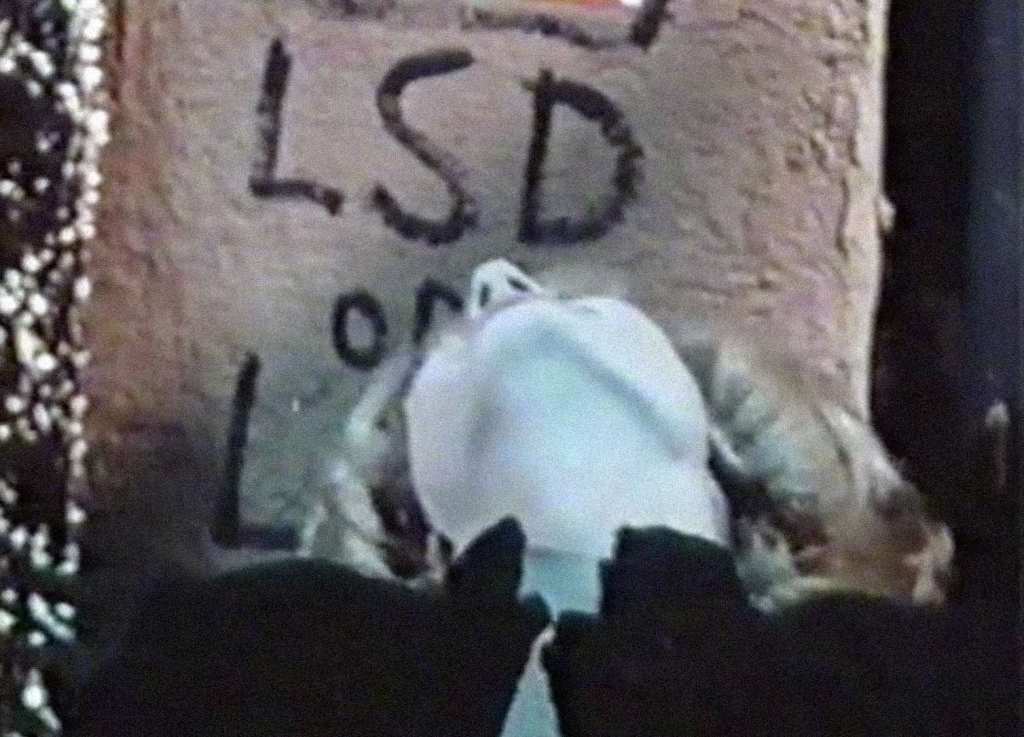
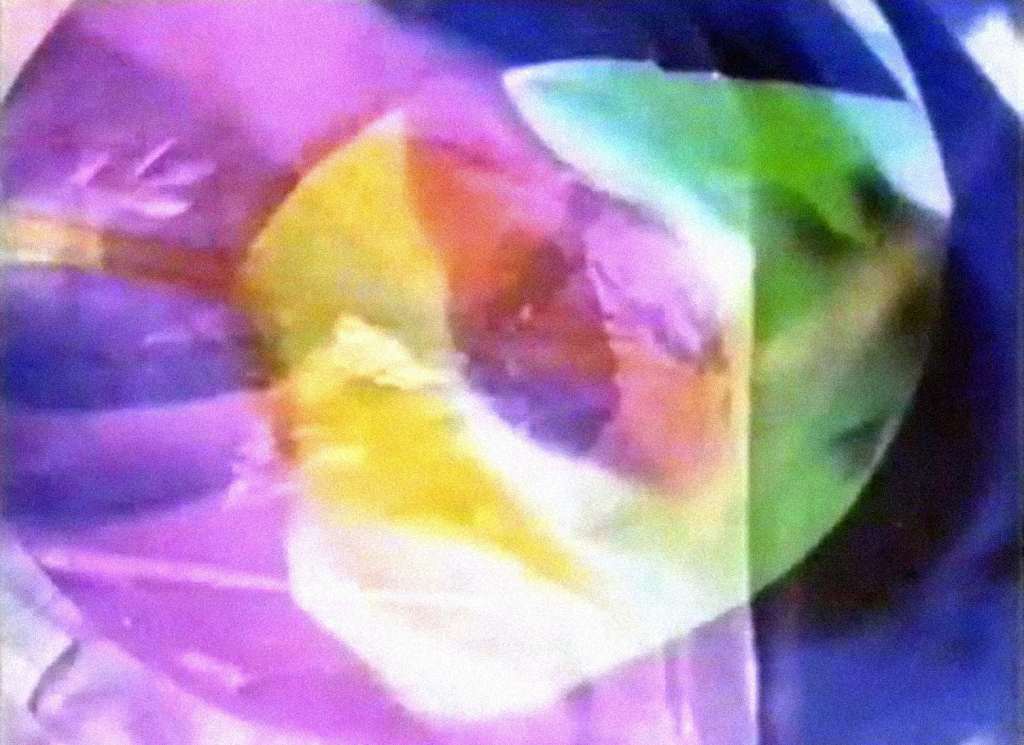





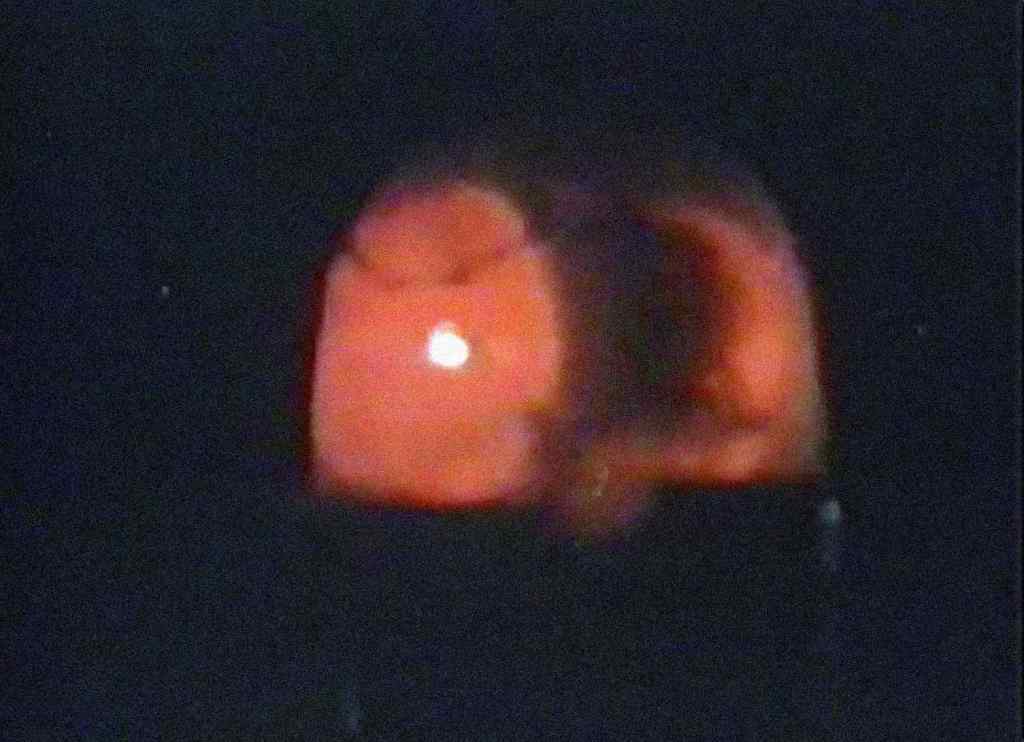
“Acid: Delirium of the Senses” is a cinematic artifact of its time, capturing the essence of the 1960s counterculture and the era’s fascination with psychedelia. While it may not have achieved mainstream success, it offers insight into the period’s experimental filmmaking and the societal issues surrounding drug use.
 The Other Cinema