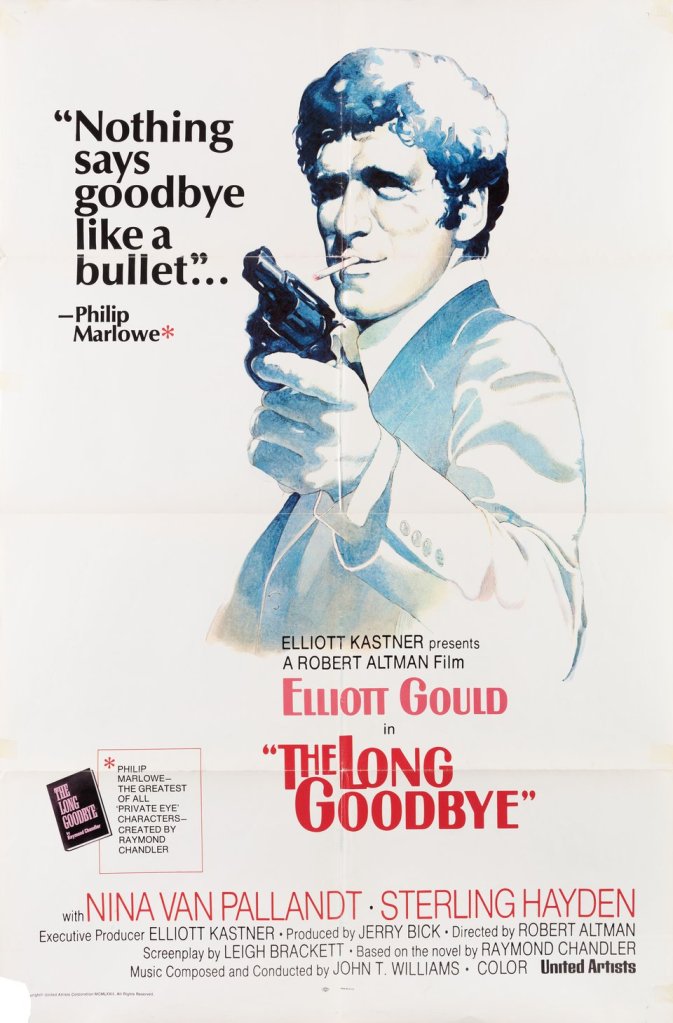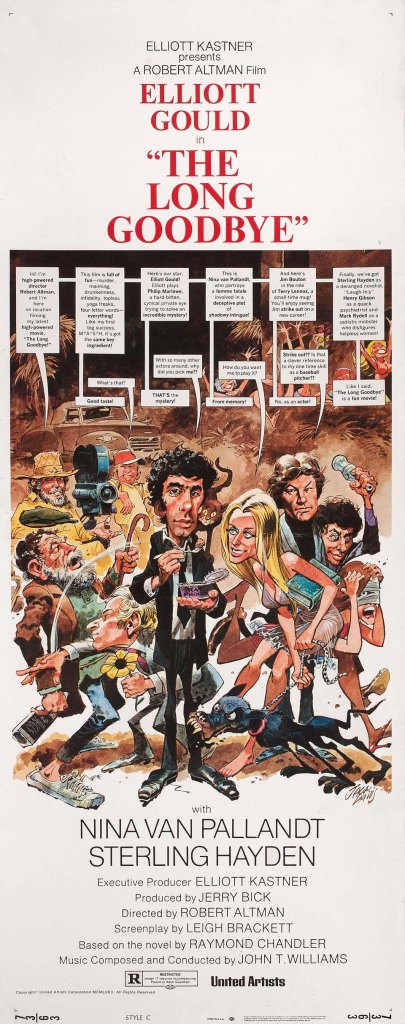
“The Long Goodbye” is a 1973 American neo-noir crime film directed by Robert Altman and adapted by Leigh Brackett from Raymond Chandler’s 1953 novel. The film stars Elliott Gould as private detective Philip Marlowe, with Nina van Pallandt portraying Eileen Wade, Sterling Hayden as Roger Wade, Mark Rydell as Marty Augustine, Henry Gibson as Dr. Verringer, David Arkin as Harry, and Jim Bouton as Terry Lennox.
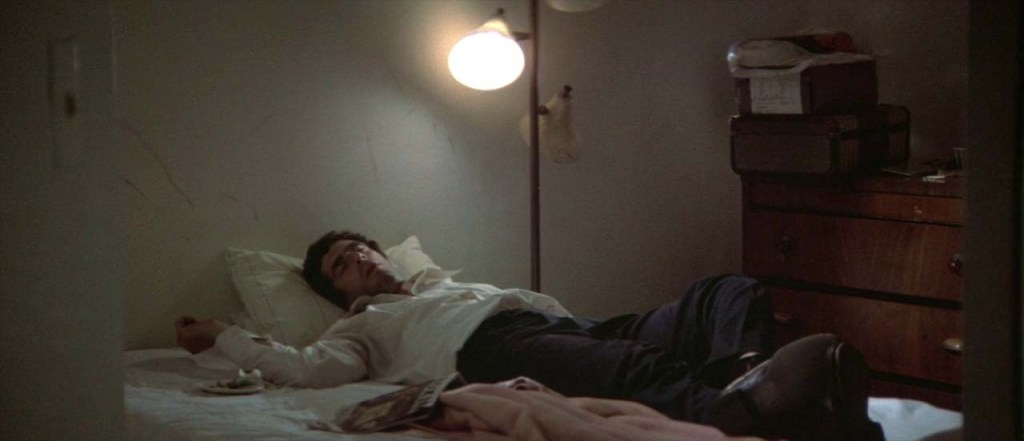
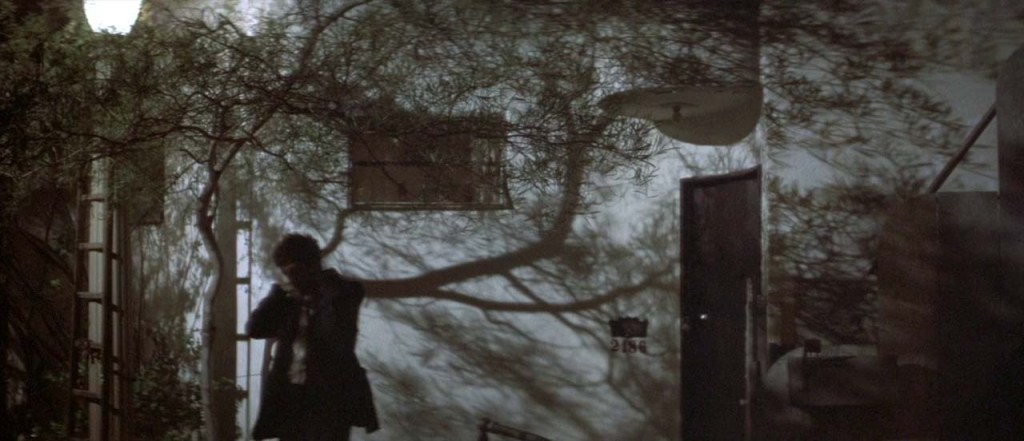
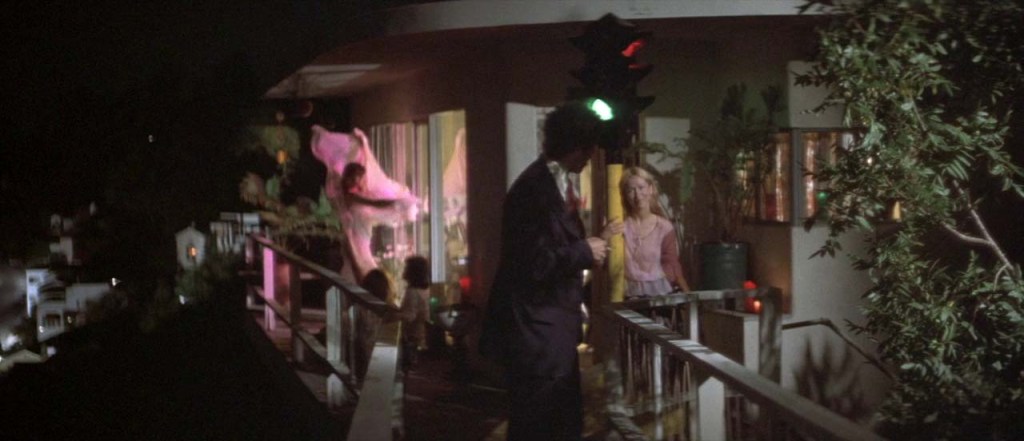
Unlike traditional adaptations of Chandler’s work, Altman’s film relocates Marlowe from the 1940s to early 1970s contemporary Los Angeles. This shift creates a disorienting clash between the classic hard-boiled detective and a culture that appears to have abandoned the values of loyalty, honor, and personal responsibility that define his character.
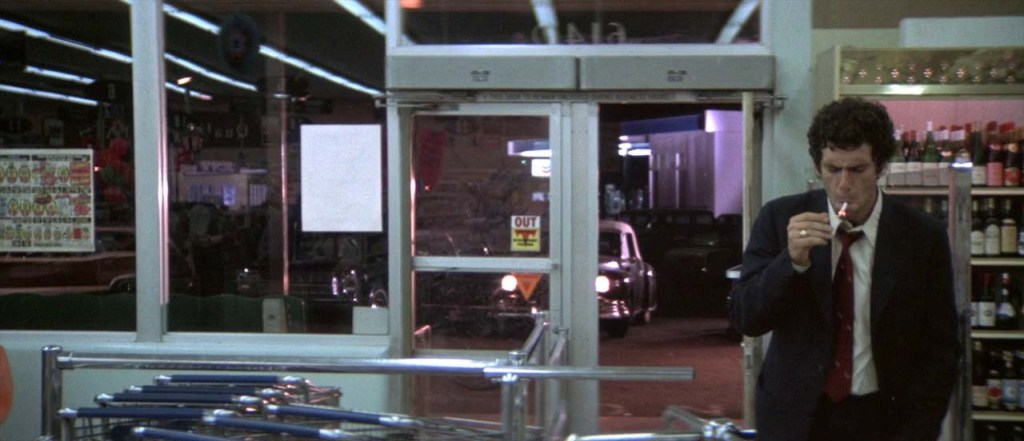

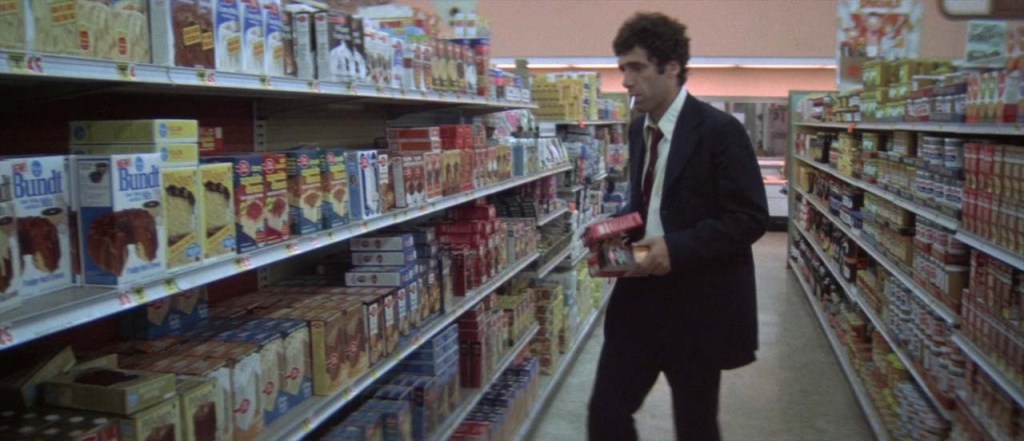
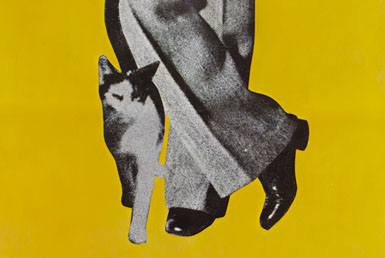
The film opens in the middle of the night. Philip Marlowe is awakened by his cat, which wants to be fed. He discovers that he has run out of the specific brand of cat food his pet prefers and drives to an all-night supermarket to find a replacement. When he returns, the cat completely rejects the substitute food and eventually runs away. This seemingly trivial episode establishes Marlowe as a man devoted to personal loyalty, even when that loyalty is not reciprocated.
Soon after, Marlowe receives an unexpected visit from his old friend Terry Lennox (Jim Bouton). Lennox appears nervous and is desperate to leave Los Angeles immediately. He asks Marlowe to drive him to the Mexican border but refuses to explain what has happened. Although Marlowe senses something is wrong, his loyalty to Lennox takes precedence over his suspicions. He drives him across the border into Tijuana and then returns home.
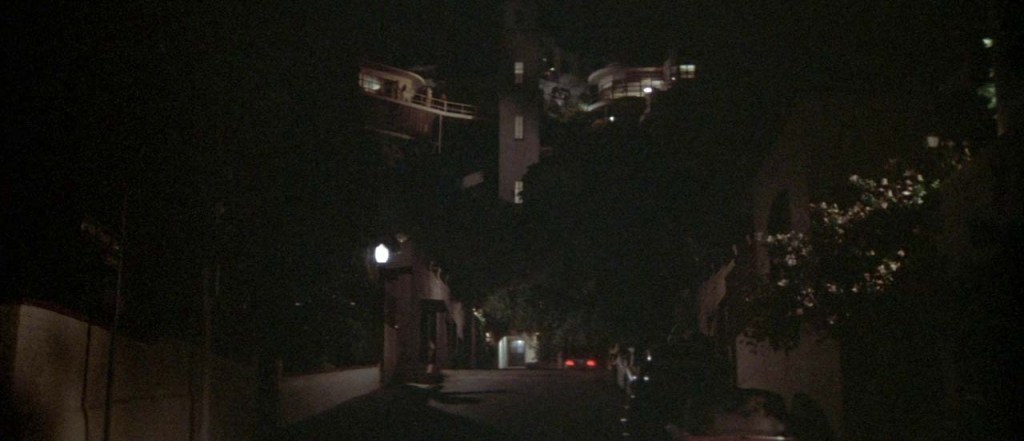
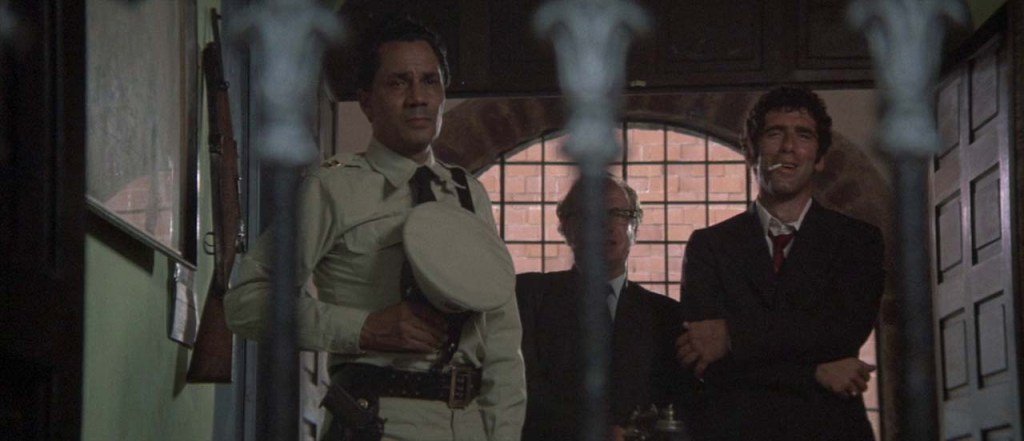
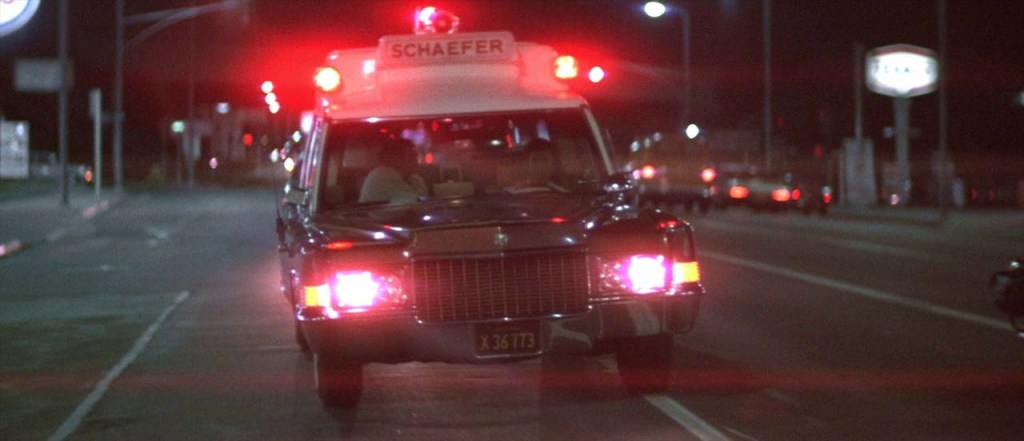
Marlowe’s loyalty quickly lands him in trouble. Upon his return, Los Angeles police are waiting for him. They inform him that Lennox’s wife, Sylvia, has been murdered and that Lennox is the prime suspect. Because Marlowe aided Lennox in escaping to Mexico, the police consider him an accessory. Marlowe is questioned and briefly detained, yet he refuses to believe that Lennox could have murdered his wife.
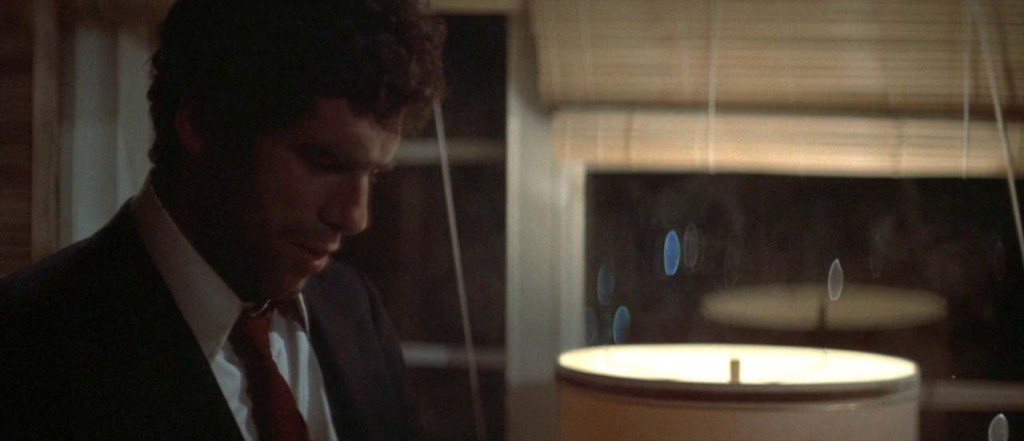

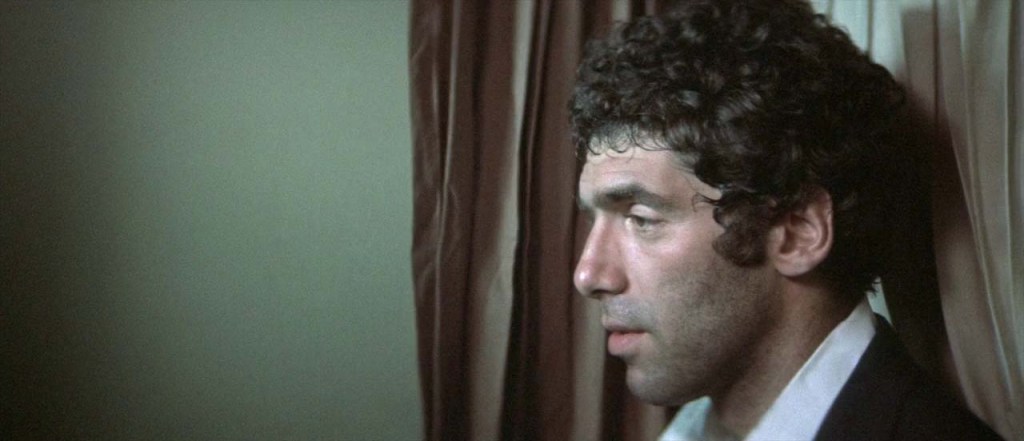
Shortly thereafter, Marlowe is released. He learns that the case is effectively closed because Lennox has allegedly committed suicide in Mexico. Although the official explanation seems convenient, Marlowe remains unconvinced. His instincts tell him that something about Lennox’s disappearance does not add up.
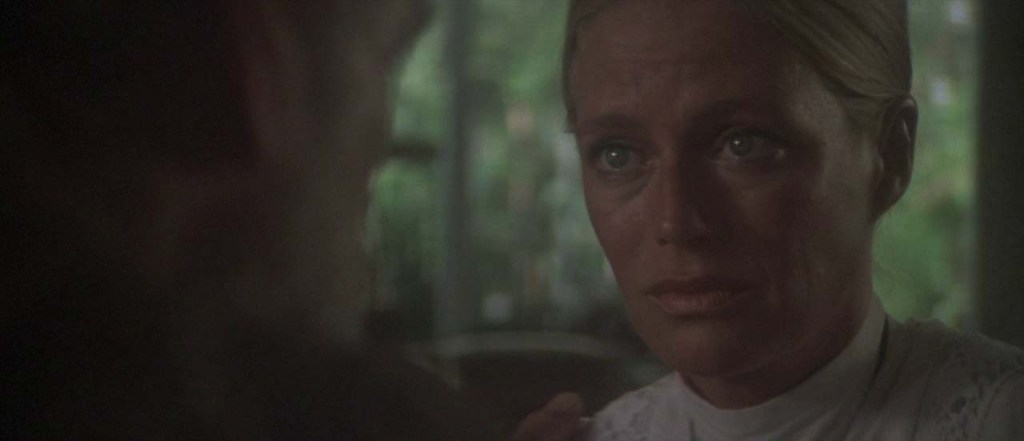
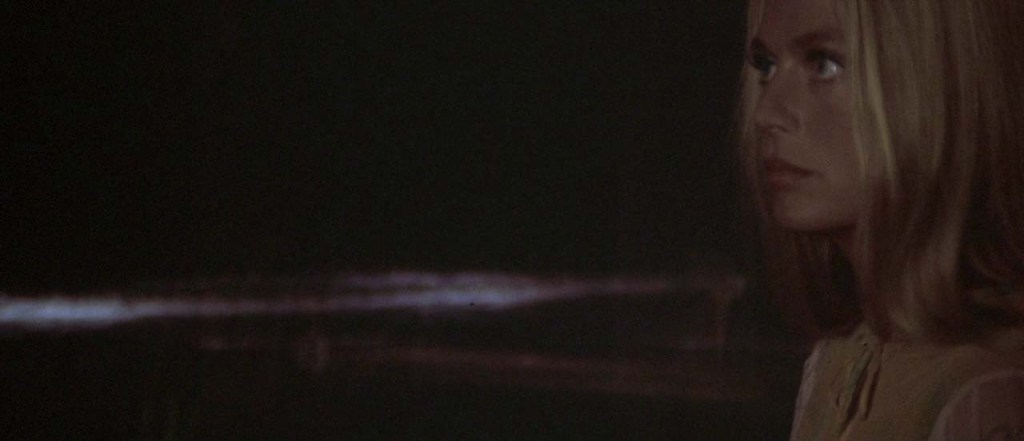
Marlowe soon takes on another case. Eileen Wade (played by Nina van Pallandt), an attractive and wealthy woman, hires him to find her husband, Roger Wade (Sterling Hayden), a successful but troubled novelist who has disappeared. Roger struggles with alcoholism and has previously sought help at a rehabilitation clinic to overcome his drinking, but Eileen cannot locate him at any of his usual haunts.
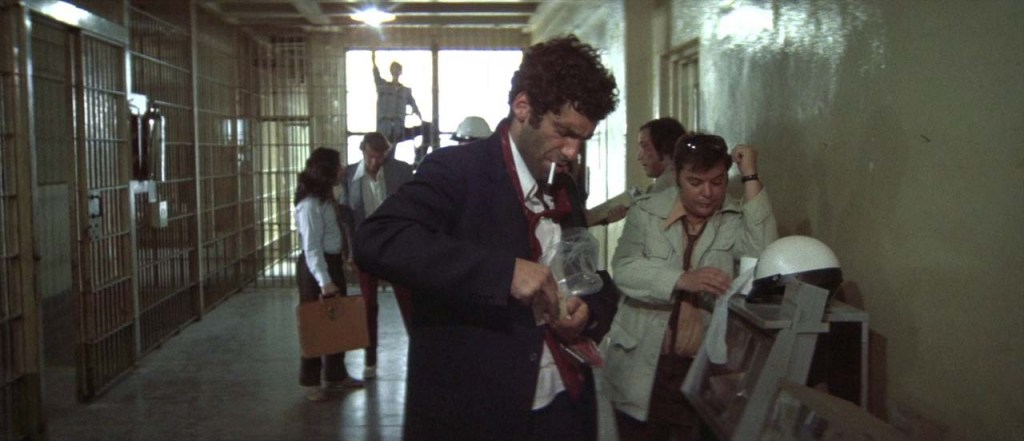
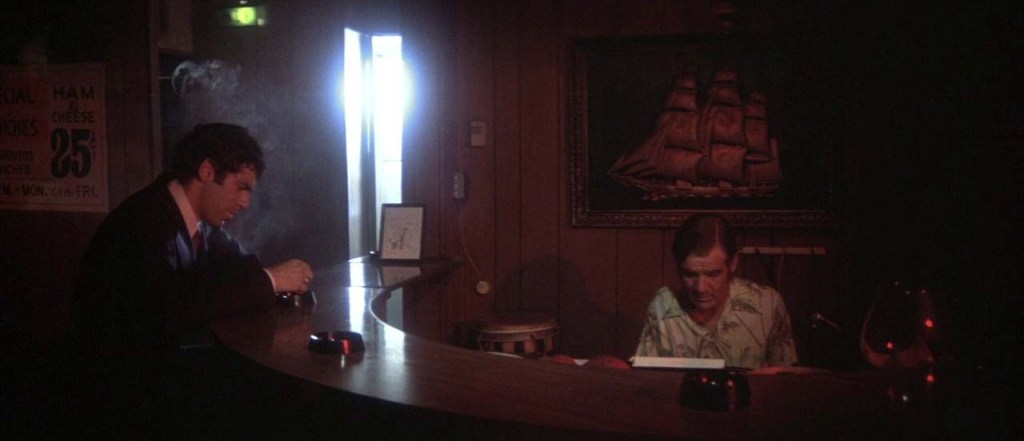
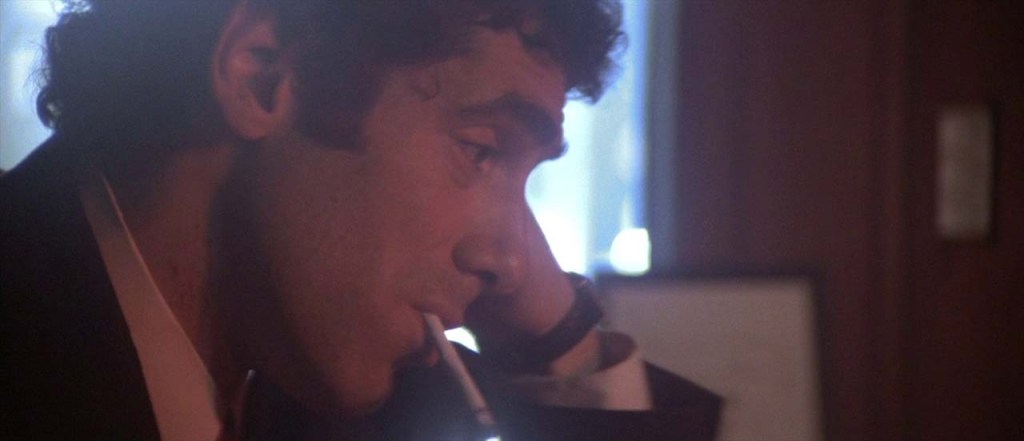
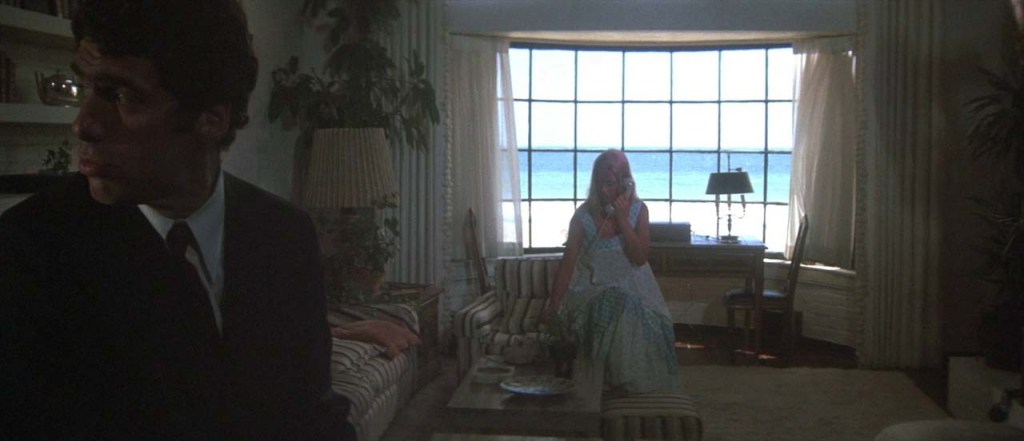
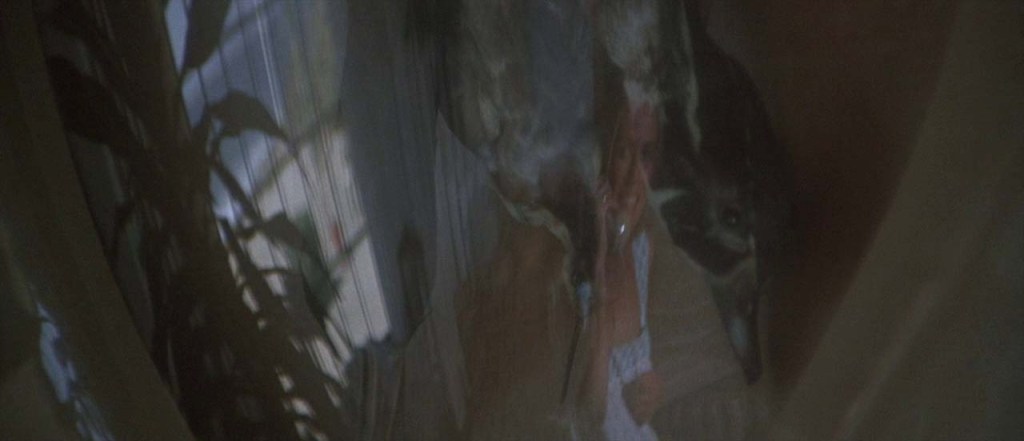
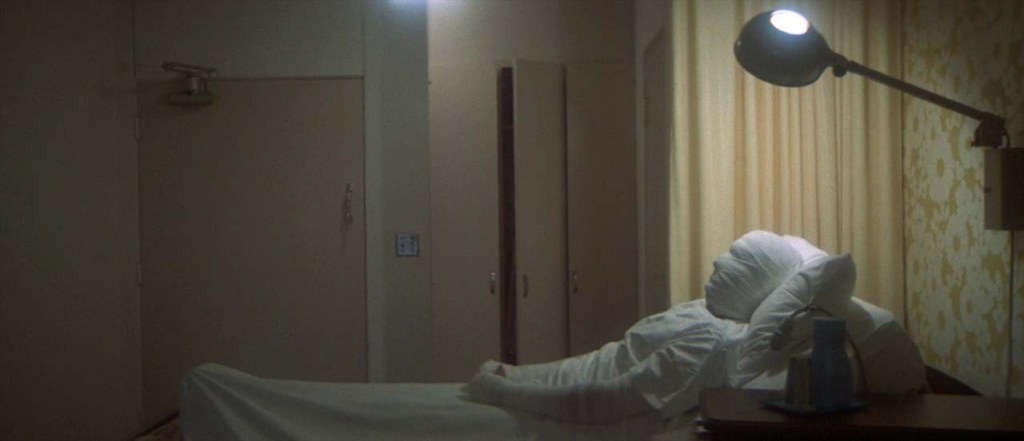
Marlowe tracks Roger down to a treatment facility run by the eccentric Dr. Verringer (Henry Gibson). Roger is a volatile and self-destructive individual whose alcoholism has left him emotionally unstable. Marlowe successfully finds him and brings him home, but the situation quickly becomes more complex. Roger’s behavior indicates that his disappearance may not just be another episode of alcoholism.
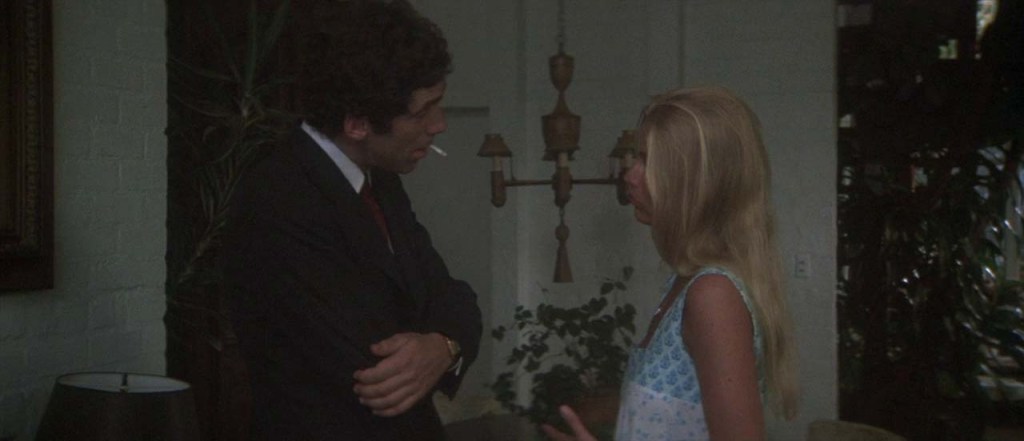
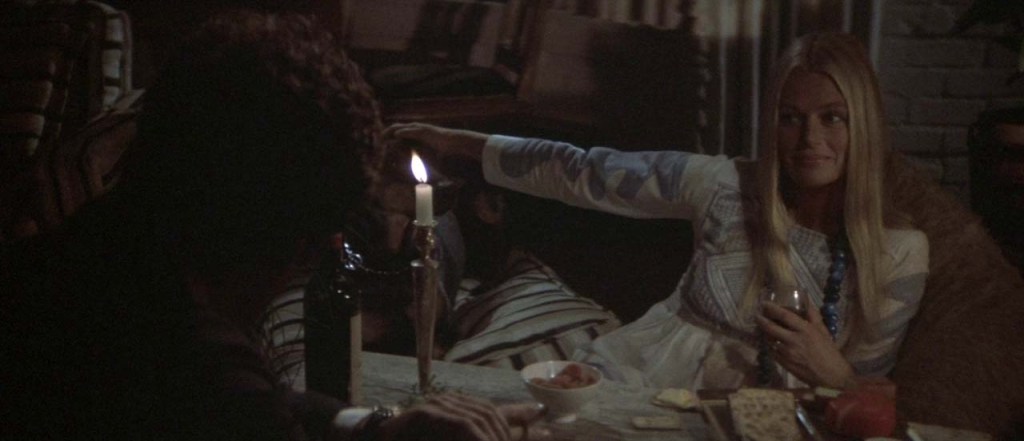
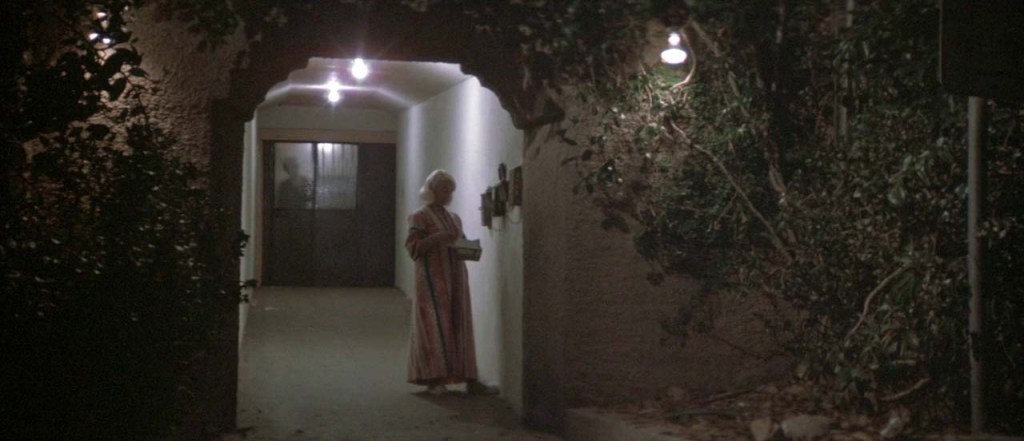
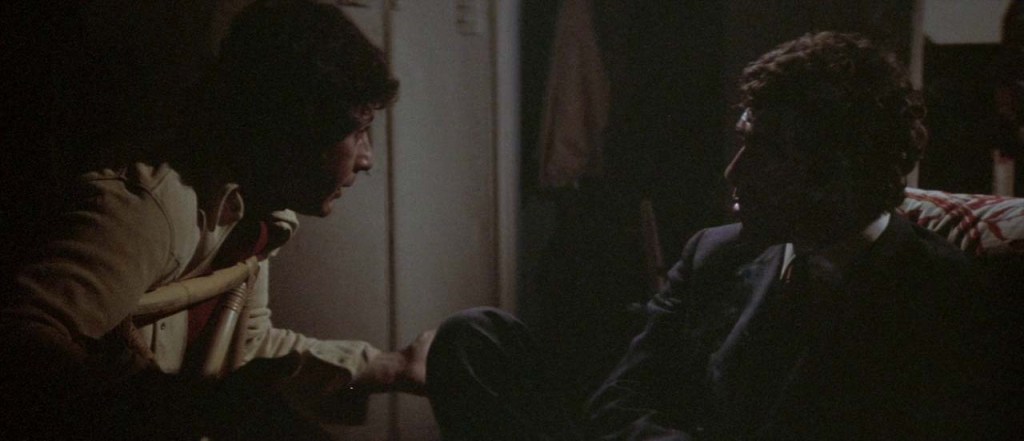
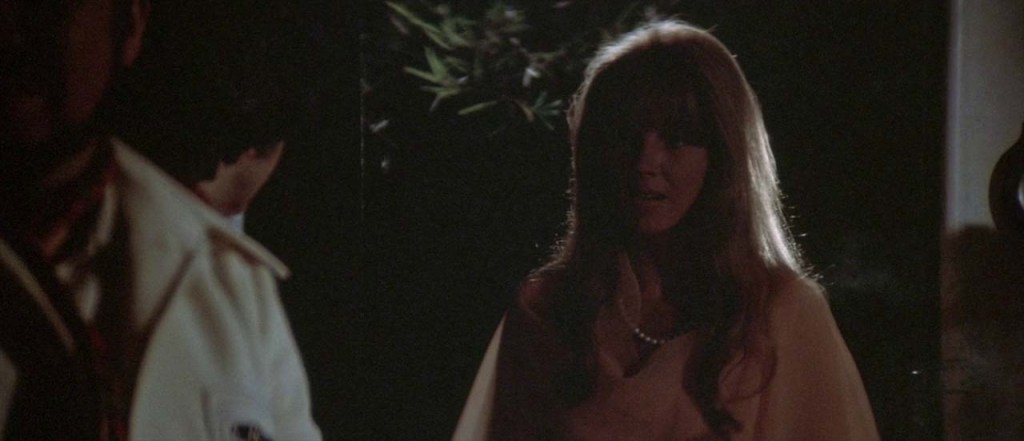
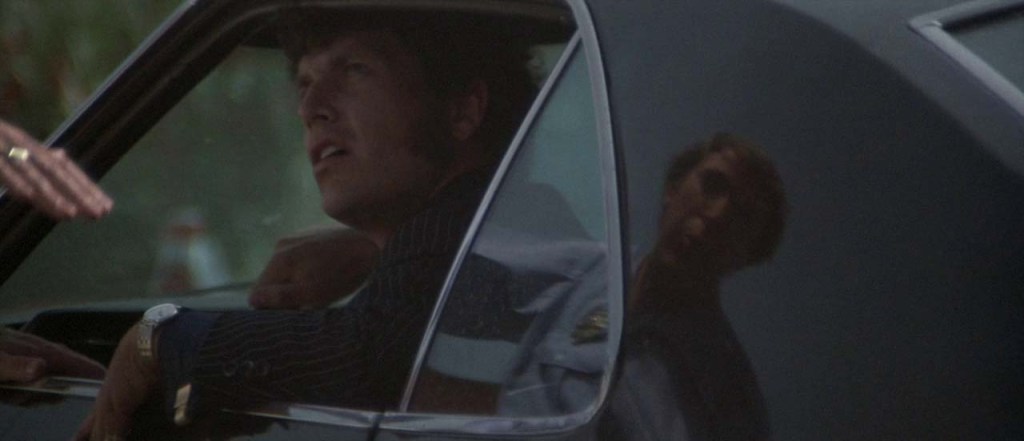
As Marlowe becomes more involved with the Wade household, he begins to notice connections between the Wades and his missing friend, Lennox. Eileen knows Terry, and Marlowe gradually realizes that Lennox’s disappearance, Sylvia’s murder, Roger’s issues, and a much larger criminal operation may all be interconnected.
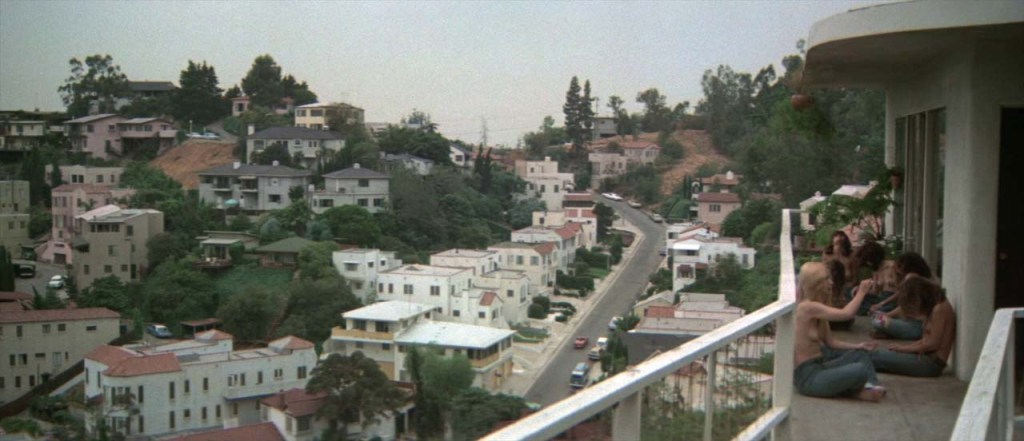
Altman intentionally places Marlowe amidst the eccentric residents of 1970s Los Angeles. His apartment building is filled with unusual neighbors, including a group of young women who practice yoga and exercise in an atmosphere marked by casual sexual freedom. Malibu is populated by affluent residents, artists, hustlers, drug users, criminals, and individuals who appear to live without any recognizable moral framework.
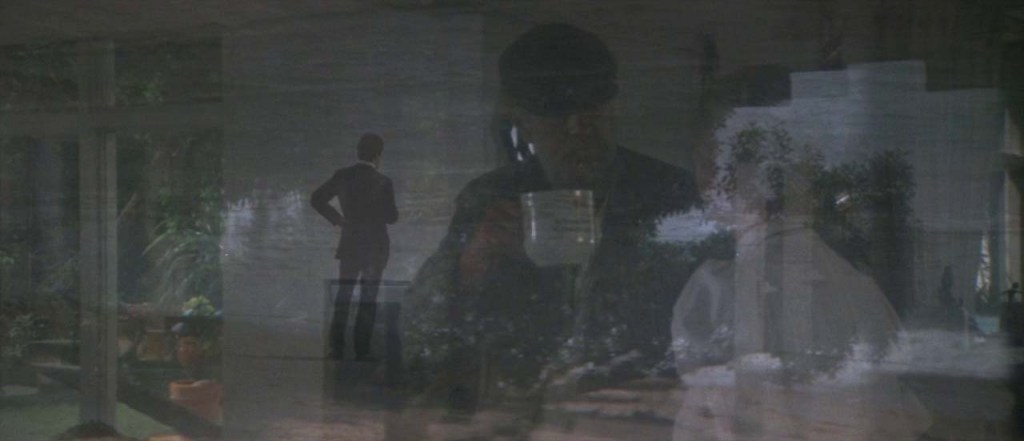
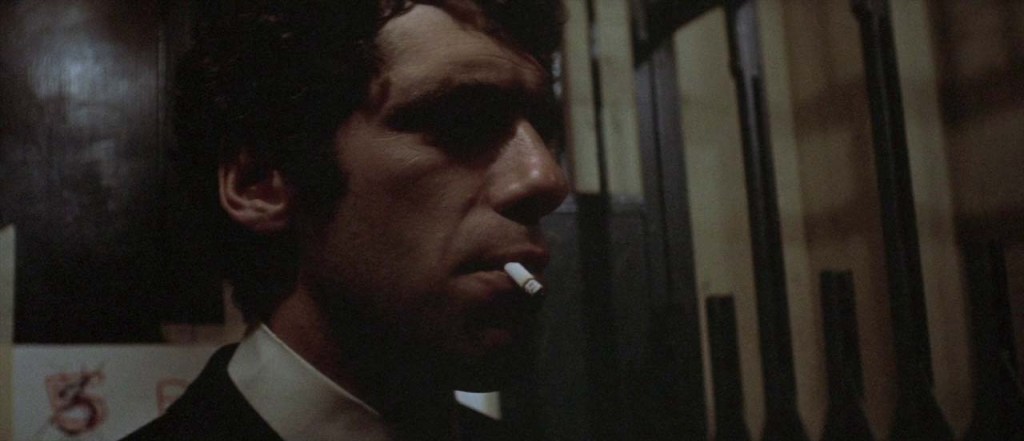
In stark contrast, Marlowe is almost comically old-fashioned. He dresses and behaves like a detective from a different era, speaks in Chandleresque wisecracks, drives an aging automobile, and adheres to a personal code that compels him to support his friends, even when it is irrational. Altman effectively places a 1940s private eye in the early 1970s and explores the consequences of his moral beliefs clashing with the surrounding society.
The investigation becomes increasingly dangerous when Marlowe encounters gangster Marty Augustine, portrayed by Mark Rydell. Augustine is searching for $350,000 that Terry Lennox was supposedly responsible for delivering. He suspects that Marlowe may know the money’s whereabouts or have aided Lennox in concealing it.
Augustine is particularly frightening because he does not conform to the typical polished gangster image found in classic film noir. Instead, he is erratic, insecure, and brutally violent. In one disturbing scene, he casually smashes a bottle against a woman’s face, showcasing his aggression. This act of violence reveals the stark contrast between the glamorous exterior of Los Angeles and the underlying brutality.

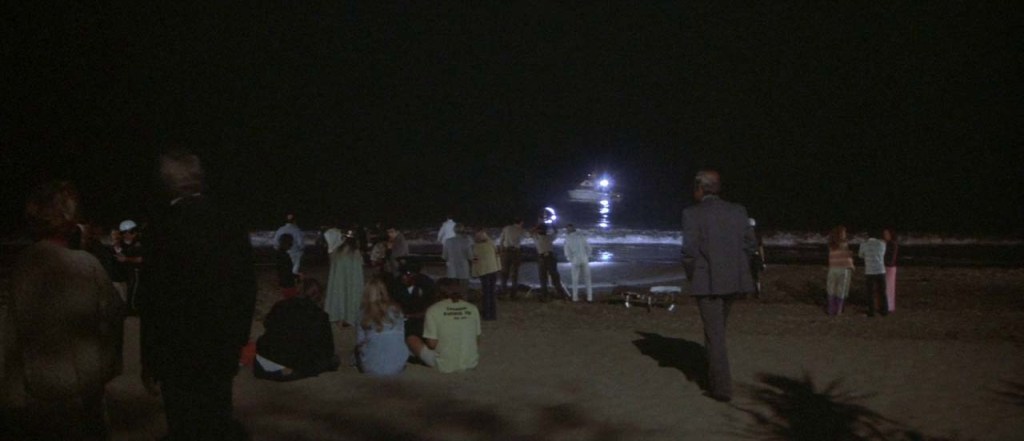
Despite repeated warnings to stop, Marlowe continues his investigation. His search takes him through the affluent Malibu community, the criminal underworld, a rehabilitation clinic, police stations, and various eccentric corners of Los Angeles. Everywhere he goes, he encounters individuals who seem indifferent to loyalty or truth.
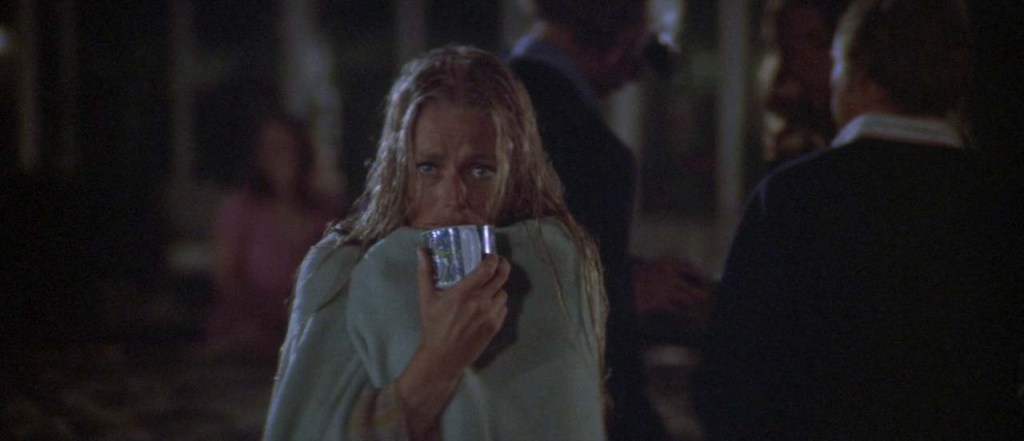
Roger Wade becomes increasingly significant to the investigation. His struggles with alcoholism, paranoia, and inability to complete his novel make him a volatile figure. However, his connections to Eileen and Lennox suggest that his personal issues may be intertwined with the larger mystery. Marlowe begins to suspect that those around Roger know more about Lennox’s disappearance than they are willing to disclose.
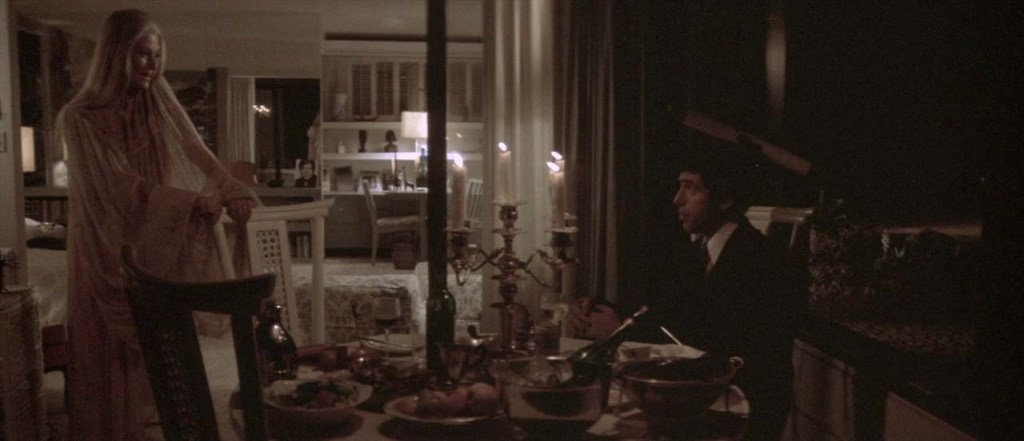
The relationship between Marlowe and Eileen is complex and ambiguous. She appears vulnerable and genuinely concerned about her husband, yet Marlowe gradually realizes she may not be the innocent figure she initially seems. Her history with Lennox and her relationship with Roger become increasingly significant as Marlowe reconstructs the events surrounding the murder.
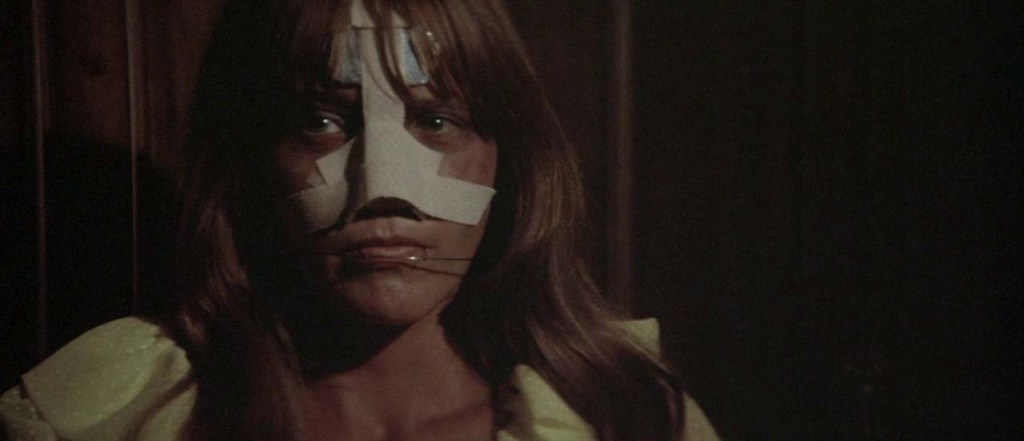
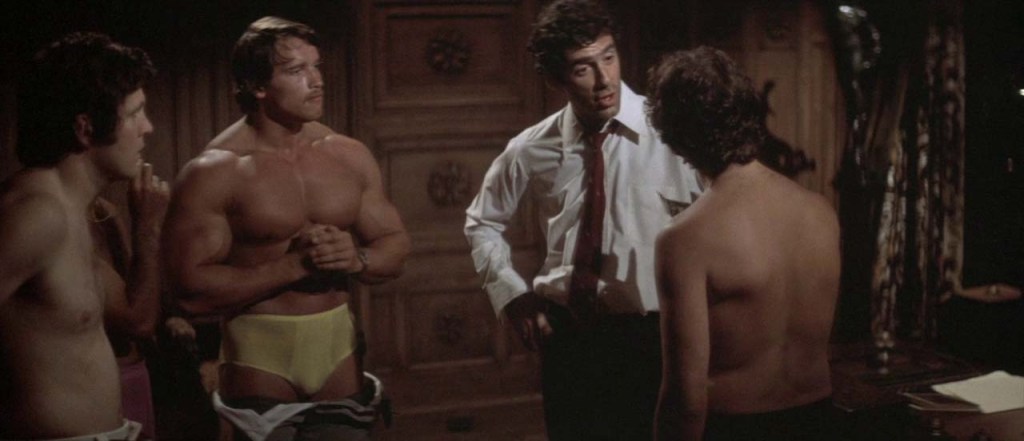
Throughout the investigation, Altman consistently subverts conventional detective-movie expectations. Clues do not necessarily lead anywhere; characters change their stories; individuals who seem suspicious may actually be innocent, while seemingly respectable people hide unsettling secrets. The mystery itself becomes less important than Marlowe’s gradual realization that the moral universe he once understood has disappeared.
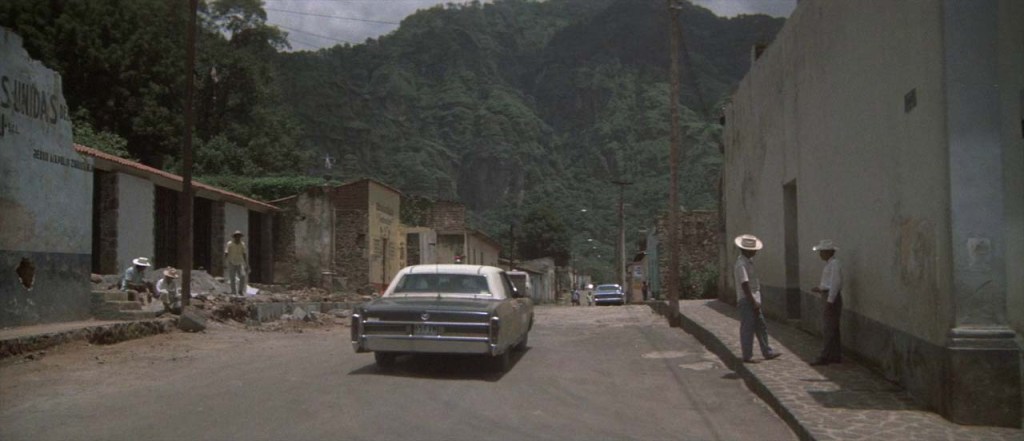
At one point, Marlowe’s cat returns, but only after he finds an alternative way to obtain the food it prefers. This seemingly insignificant subplot reflects Marlowe’s character. He is stubbornly loyal to an animal that keeps rejecting him, just as he remains loyal to Lennox despite mounting evidence that suggests Lennox may have betrayed him. Ultimately, the investigation leads Marlowe back to Mexico, where the truth about Lennox’s supposed suicide starts to surface. Marlowe discovers that the official story is misleading. The relationship between Lennox and the Wades, the missing money, and the violence surrounding the case are all part of a carefully constructed deception.
Eventually, Marlowe discovers the devastating truth about his old friend: Lennox is alive and has been hiding in Mexico. The supposed suicide was part of an elaborate scheme, and more importantly, Lennox is not the innocent victim Marlowe had believed him to be.

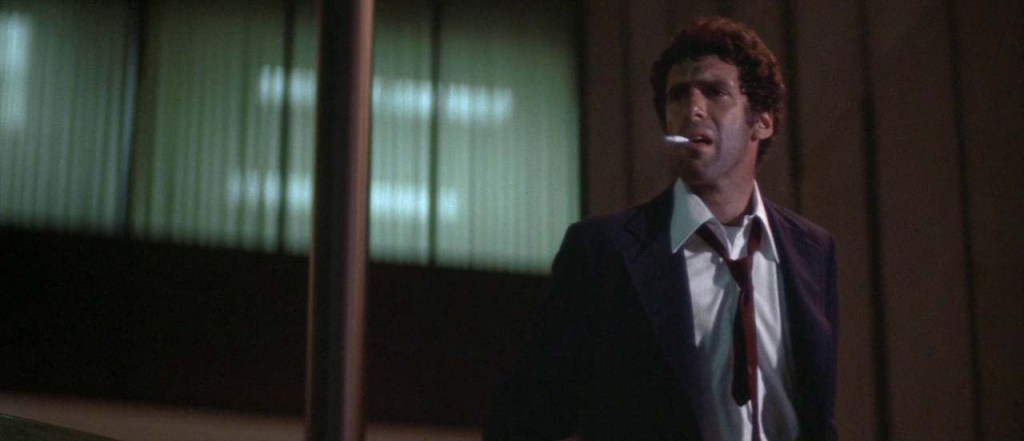
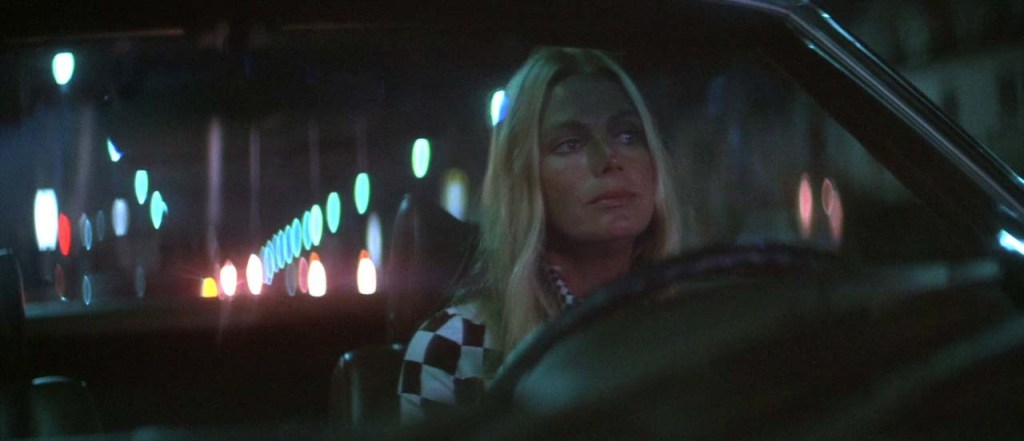
When Marlowe finally confronts Lennox, the betrayal cuts deeper than the criminal mystery itself. Marlowe has risked his freedom and safety because he trusted their bond. However, Lennox has treated that loyalty as something he could exploit.
This confrontation becomes the emotional climax of the film. Marlowe’s reaction is radically different from what one would expect from a traditional Chandler detective. Instead of simply accepting the betrayal or walking away, he takes matters into his own hands. This ending transforms the film from a conventional mystery into a dark examination of loyalty and moral disillusionment.
Ultimately, Marlowe kills Lennox and walks away, leaving the consequences of his actions behind. This shocking gesture violates the character’s established code and represents his final rejection of a society in which friendship, trust, and decency have become meaningless.
In the final moments of the film, Marlowe returns to Los Angeles. Although he remains fundamentally the same man, his encounter with Lennox has profoundly altered his understanding of loyalty. The mystery has been resolved, but there is no sense of triumph—rather, the conclusion is both bitter and strangely liberating.

One of the most distinctive features of “The Long Goodbye” is its reimagining of Raymond Chandler’s Philip Marlowe. Elliott Gould portrays him not as a conventionally cool or invincible detective, but as a rumpled, distracted, and somewhat lonely man who feels perpetually out of sync with his environment. Altman reportedly viewed this version of Marlowe as a kind of “Rip Van Marlowe”—a character whose moral sensibilities belong to a bygone era.
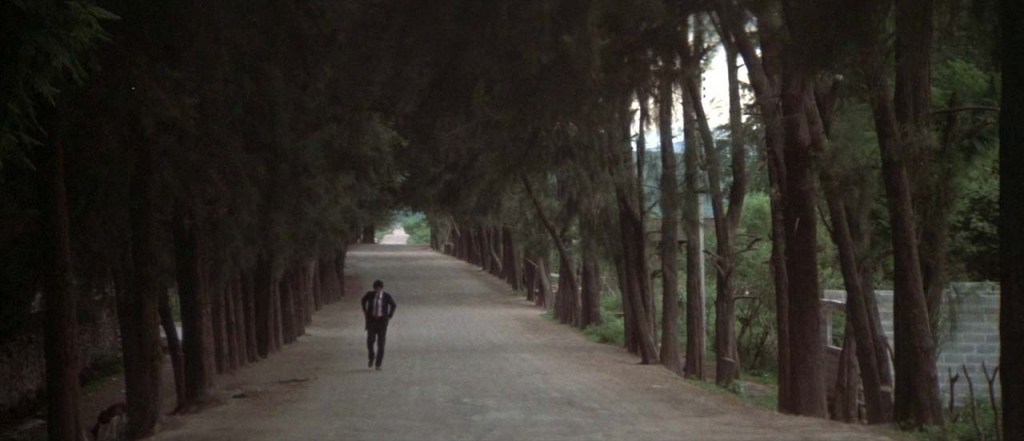
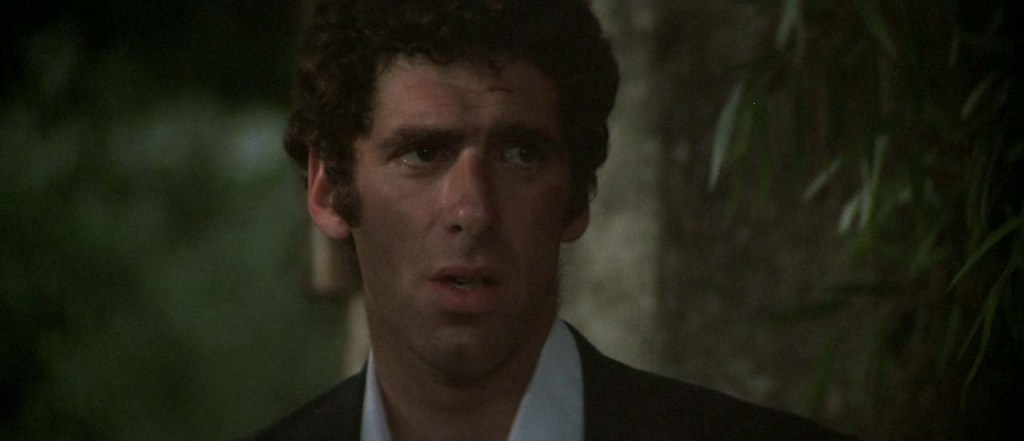
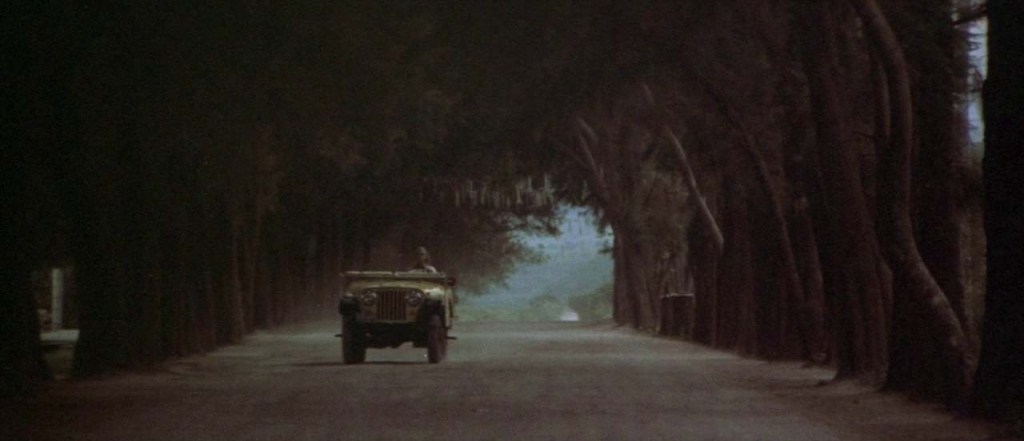
The film’s score, composed by John Williams, is equally unconventional. The main theme, “The Long Goodbye,” is featured repeatedly throughout the movie in radically different arrangements—ranging from radio versions to supermarket music and various other adaptations. This recurring song serves as both a musical joke and a structural device, following Marlowe through his increasingly bizarre encounters.
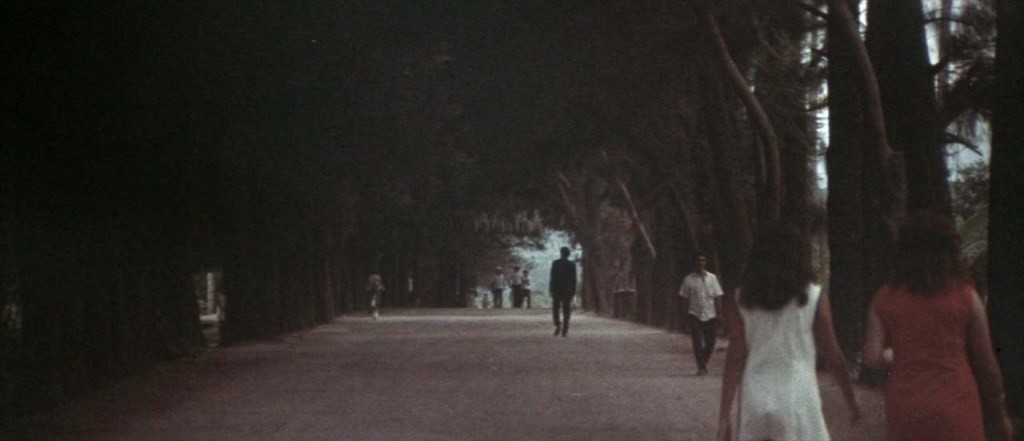
At its core, “The Long Goodbye” is less focused on solving a murder than on exploring the consequences of an old-fashioned moral code clashing with a society that no longer values it. While Marlowe’s insistence on loyalty initially seems noble, his devotion to Lennox ultimately blinds him to the truth. Consequently, his final act represents both a betrayal of his own principles and a recognition that the world around him has changed.