


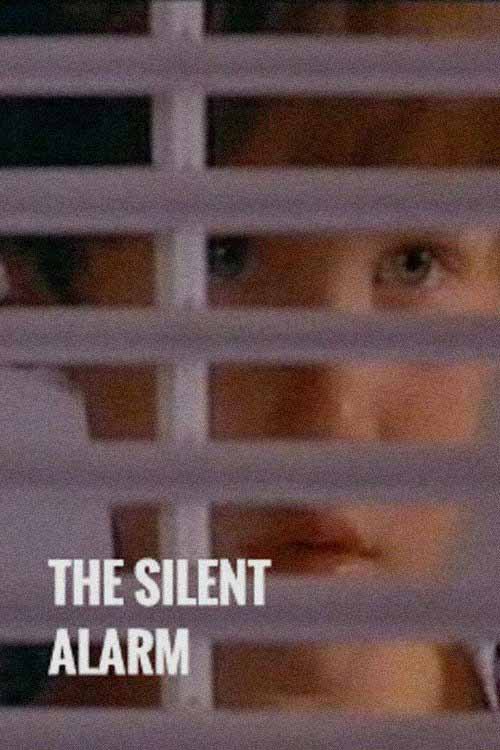
“The Silent Alarm” (1993) is a short dramatic thriller written and directed by Rob Morrow, known for his role in “Northern Exposure.” The film stars Jesse Lee Soffer as a young boy, alongside Scott Renderer and Terry Walters. With minimal dialogue and a stylized 1950s suburban setting, the film delves into themes of childhood intuition, suspicion, and the quiet tension of domestic danger.






Set in an idyllic, 1950s-style suburban neighborhood, “The Silent Alarm” follows a young boy (Jesse Lee Soffer) who lives with his single mother (Terry Walters). The neighborhood appears peaceful and orderly—children play outside, neighbors chat casually, and life unfolds in quiet, predictable routines. However, beneath this calm facade, the boy senses something unsettling.






One afternoon, a boy notices a mysterious man, Scott Renderer, arriving in a convertible and approaching his home. The man introduces himself as a door-to-door salesman offering home security systems, including a “silent alarm.” He captivates the boy’s mother with his confidence and friendliness, and she quickly warms up to him. Before long, the man starts spending more time at their house, gradually integrating himself into their lives.








As the relationship between the man and the mother deepens, the boy becomes increasingly uneasy. The man presents himself as kind and attentive—bringing gifts, participating in neighborhood gatherings, and trying to bond with the boy. Despite these gestures, the boy senses that something is wrong. His suspicions grow through small, subtle observations: the man’s behavior appears calculated, his presence feels intrusive, and his charm seems forced.






The boy watches quietly, often from a distance, as the man becomes more entrenched in their household. The tension builds primarily through visual storytelling, with very little dialogue. The film emphasizes the boy’s perspective, capturing his confusion, fear, and inability to articulate his feelings. His “silent alarm” is his intuition, warning him that the man cannot be trusted.






Eventually, the boy witnesses the man secretly going through his mother’s jewelry and personal belongings, confirming his fears that the man is a con artist and thief. This discovery heightens the boy’s anxiety, but he struggles with how to respond. As a child, he feels powerless and worries that his mother may not believe him.




The situation becomes increasingly dangerous when the man realizes that the boy suspects him. Tension escalates as the boy must decide whether to confront the situation or remain silent. The film builds toward a quiet yet suspenseful climax, focusing on the boy’s attempt to expose the man and protect his mother.


In the end, the story resolves as the boy finally voices his suspicions, breaking the silence that has characterized much of the film. This resolution reinforces the central theme: intuition and awareness can act as an internal “silent alarm,” especially when danger lurks behind ordinary appearances.
The Film

