
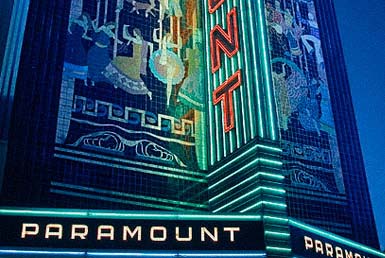

In this edition of the “Sacred Houses Series,” we pay homage to The Paramount Theater in Oakland, California, as we continue to honor notable movie theaters worldwide.
The Paramount Theatre is a premier example of Art Deco architecture in the United States and a centerpiece of Oakland’s cultural scene. A National Historic Landmark since 1931, it has withstood earthquakes and neglect. After a major restoration in the 1970s, it became a renowned performing arts venue.
The theatre was conceived and built by the Paramount Pictures corporation during the final, extravagant flowering of the movie palace era — that extraordinary period in the 1920s and early 1930s when cinema chains competed to build the most spectacular, most opulent, most overwhelming picture houses imaginable, temples of escapism designed to transport their working and middle-class audiences into a world of fantasy and glamour.
Paramount commissioned the celebrated architect Timothy Pflueger to design the Oakland theatre, and the choice proved inspired. Pflueger, a San Francisco-based architect of enormous talent and ambition, had already demonstrated his gifts with the Castro Theatre and would go on to design other Bay Area landmarks. For the Paramount, he was given a large budget, a prominent site on Broadway, and essentially free rein to create something extraordinary.
Construction began in 1930, and the theatre opened on December 16, 1931. The total construction cost was approximately $3 million.
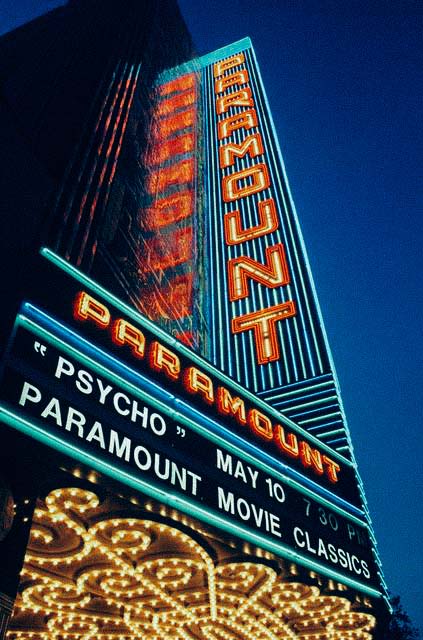
The Paramount is a masterpiece of Zigzag Moderne Art Deco — the more angular, geometric strain of Art Deco design that dominated American decorative arts in the late 1920s and early 1930s. Every element of the building, inside and out, was conceived as part of a unified aesthetic vision of extraordinary richness and coherence.
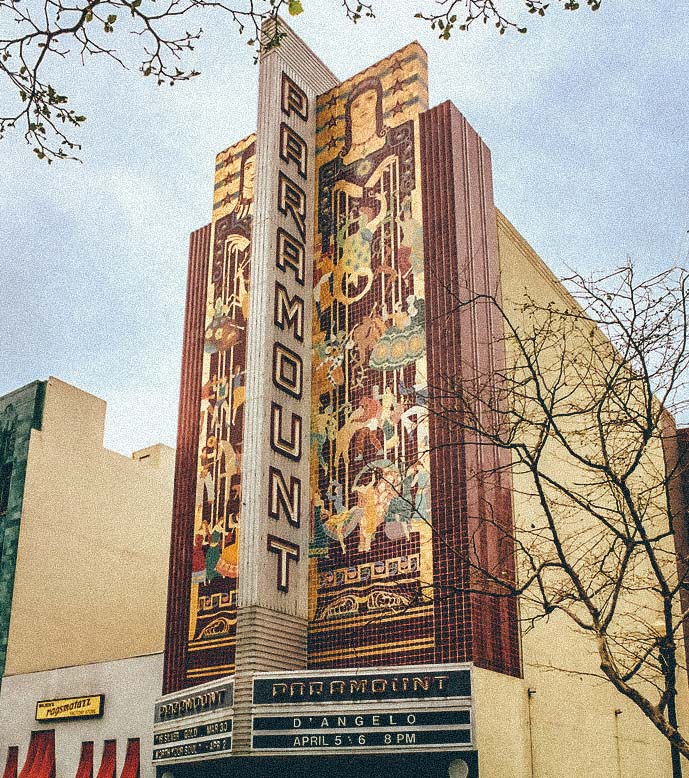
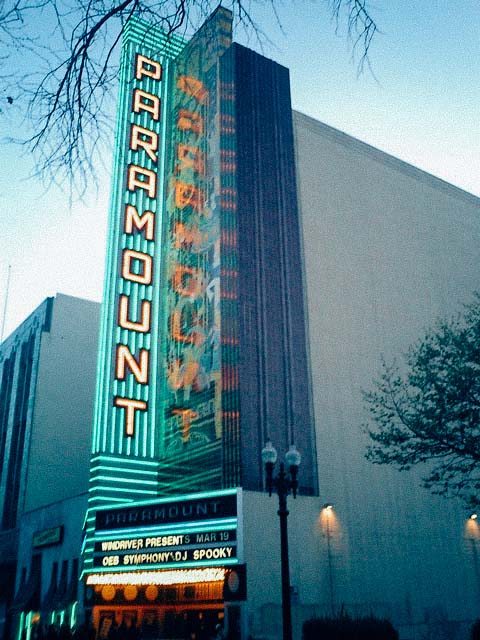
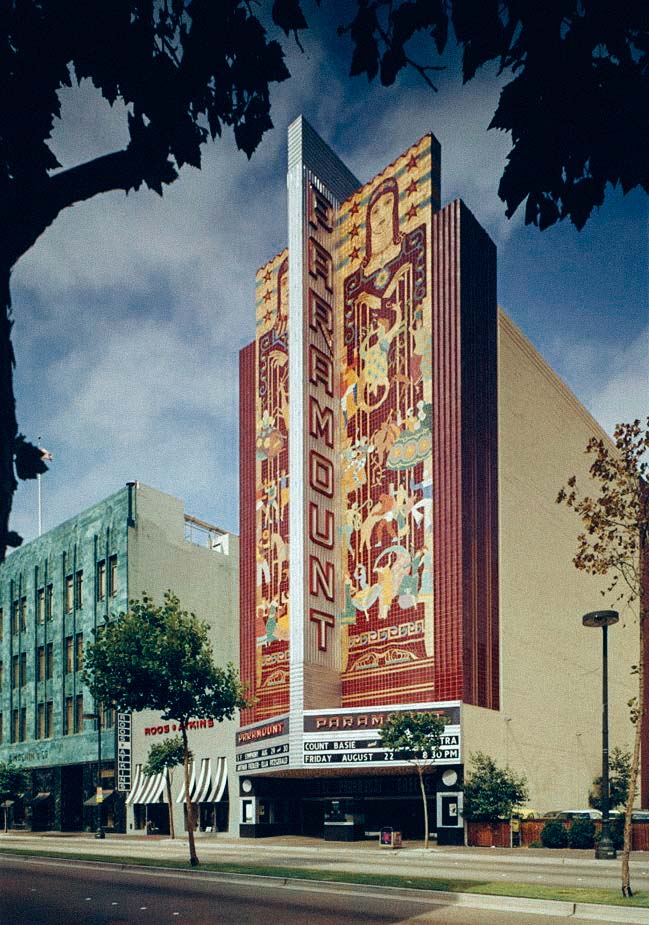
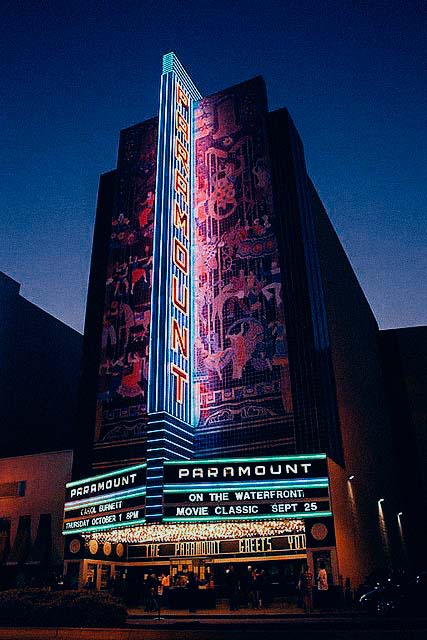
The Broadway façade is striking and immediately draws attention. The most prominent feature is a massive mosaic mural, approximately four stories tall, showcasing two large stylized human figures adorned in shimmering gold, amber, and earthy tones set against a geometric background. These figures flank the theatre’s name, which is spelled out in illuminated letters.
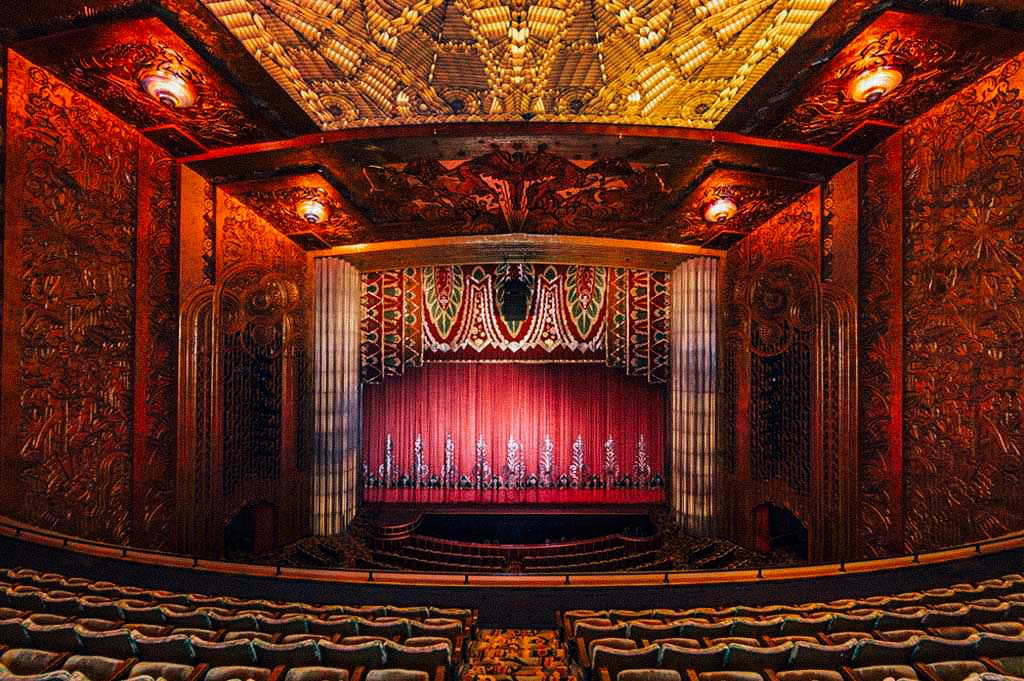
The building’s exterior is covered in terracotta and embellished with intricate geometric designs that invite closer examination. Every frieze, border, and decorative element has been thoughtfully designed and expertly crafted.
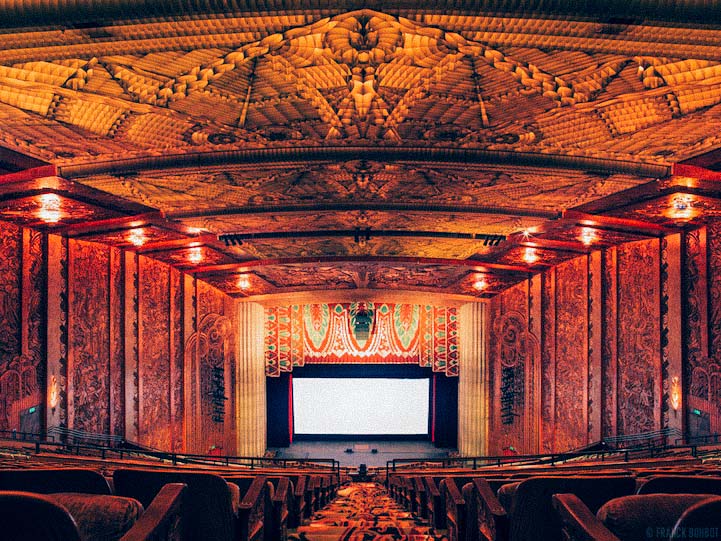
The interior of this space is breathtaking, designed by Pflueger and interior designer James Thomason. It features an eclectic mix of Mayan, Aztec, and pre-Columbian motifs alongside European Art Deco elements.
The vast lobby boasts ornamental plasterwork and warm lighting that highlights surfaces in gold, amber, and jewel tones. Every detail, from doors to fixtures, was custom-designed for a cohesive look.
The auditorium, seating about 3,000 people, is one of California’s most stunning interiors. Its side walls feature large illuminated grilles that create a soft glow during performances, offering a grand yet intimate atmosphere. The ornately decorated proscenium arch and the Art Deco ceiling further enhance the space’s beauty.
The theatre features lavishly decorated women’s restrooms, famous for their mirrored walls, custom light fixtures, and elegant details that match the venue’s grandeur.
It also houses a rare Wurlitzer pipe organ, installed at the theatre’s opening to accompany silent films and live performances. The organ survived the theatre’s decline and was fully restored, remaining in regular use for film screenings and special events.
The story of the Paramount in the postwar decades mirrors the decline of the movie palace era—a painful process that no architectural beauty could resist.
With the arrival of television in the late 1940s and early 1950s, cinema attendance plummeted. Downtown movie palaces, built to attract large audiences, were especially vulnerable as suburban multiplexes began to draw crowds with their smaller, more affordable, and conveniently located venues.
Despite attempts to boost attendance through various programming strategies, the Paramount struggled throughout the 1950s and 1960s. By the late 1960s, the theater had closed, leaving one of California’s most stunning buildings dark and deteriorating on Broadway.
In 1972, the Oakland Symphony identified the Paramount Theatre as a potential venue, leading the city of Oakland to purchase it for $1. This purchase underscored both the building’s low commercial value at the time and the city’s commitment to restoring it.
Under the guidance of the preservation architect Skidmore, Owings & Merrill, a major restoration project began. This work focused on restoring Arthur G. Pflueger’s original design, including cleaning and repairing the exterior mosaics, restoring the interior plasterwork, and reupholstering the seats. The Wurlitzer organ was also restored, and the women’s restrooms were revitalized.
The Paramount reopened in September 1973 to much celebration and was added to the National Register of Historic Places the following year. In 1977, it was designated a National Historic Landmark.
Since its restoration, the Paramount has served as a full-service performing arts venue, featuring a diverse range of programming that reflects the cultural richness of Oakland and the Bay Area.
The Paramount Theatre is much more than just a beautiful historic building. It serves as a strong argument for preservation, demonstrating that rescuing and restoring a significant structure can anchor a community, stimulate economic activity, provide an invaluable cultural resource, and connect a city to its own history and identity in ways that new construction cannot replicate. In a city like Oakland, which has faced numerous challenges, the Paramount Theatre has stood as a source of civic pride and a genuine gathering place for nearly a century. Even in the twenty-first century, it remains one of the most magnificent and beloved buildings in California. You can learn more about it HERE.
If you know of a theater that deserves recognition in our “Sacred Houses” series, please contact us and provide details about its location, name, and significance to you or your community. We are passionate about supporting local theaters and believe they should be celebrated alongside the more well-known historic venues.


Leave a Reply